Key takeaways
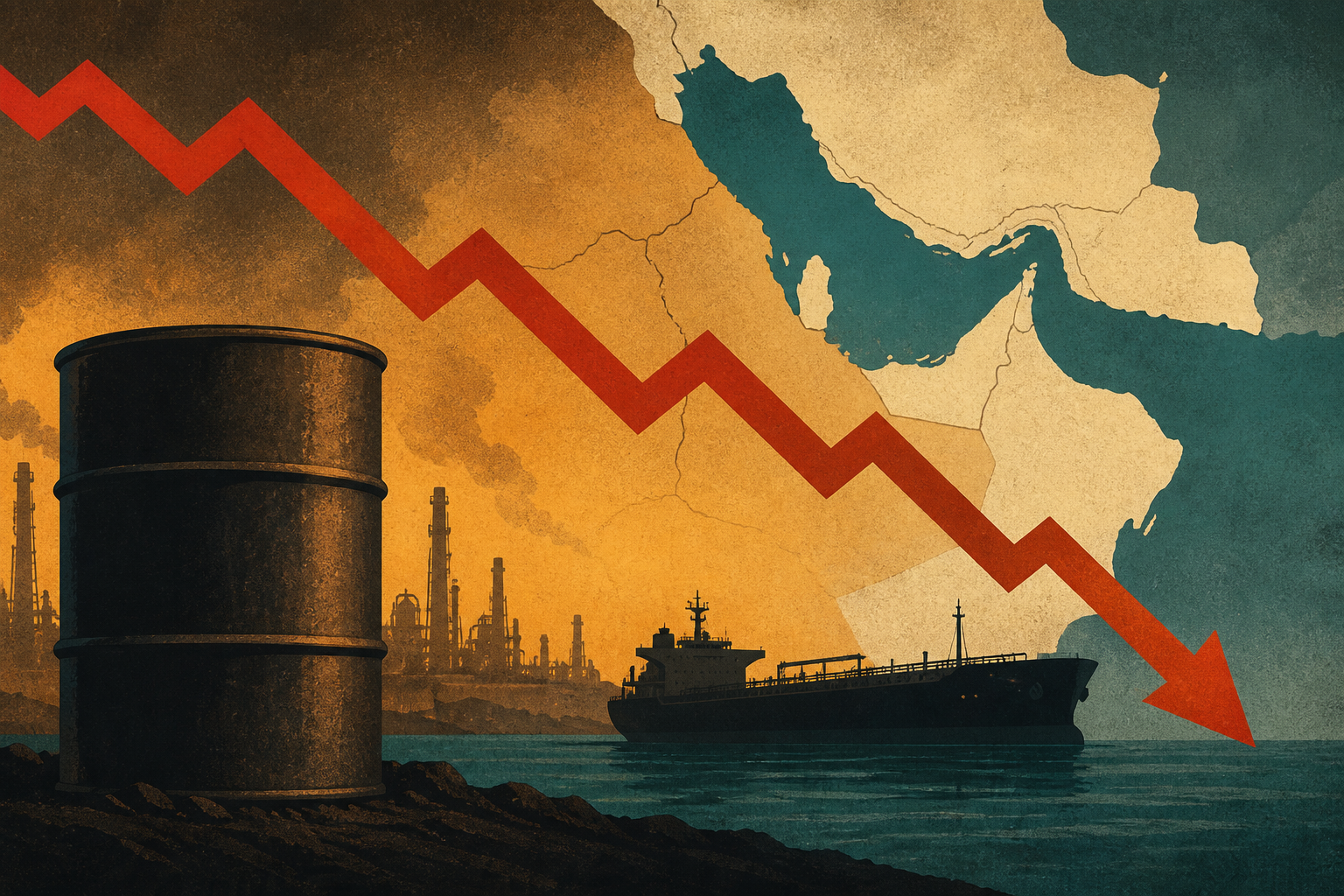
- Oil price fell Monday, Aug. 24, 2026, even as Treasury launched its toughest Iran sanctions campaign: Brent settled $92.17 (−$2.22 / −2.35%); WTI settled $85.01 (−$2.05 / −2.35%).
- Both benchmarks gained more than 5% last week on stalled U.S.–Iran talks and Hormuz constraints — Monday looked like profit-taking into a known event, not a bullish supply shock print.
- SEB’s Bjarne Schieldrop: Brent near $93 rather than $120–150 signals enough oil is still moving through the Gulf. CBA sees H2 Brent in a $70–$100 band if Hormuz recovers even to 50–60% of pre-war flows.
Oil price searches spiked Monday because the headlines said “economic D-Day” and the futures board said sell. That is not a contradiction if you trade events for a living. Sanctions that were previewed for a week get priced on the threat; cash settles when traders take last week’s 5% and wait for whether Iran actually chokes Hormuz with rockets — or whether enough tankers keep clearing.
Monday’s oil price settle
Reuters closing tape Aug. 24:
- Brent crude futures: −$2.22 (−2.35%) to $92.17 per barrel
- WTI crude futures: −$2.05 (−2.35%) to $85.01 per barrel
- Intraday CNBC prints: WTI near $84.89, Brent near $92.06 during the session — same direction
Context: both contracts posted a second consecutive weekly gain last week, up more than 5%, as peace talks stalled and Hormuz traffic stayed constrained. Monday’s drop erased a slice of that rally without breaking the geopolitical premium that still keeps Brent above $90.
Reporting: CNBC on oil price and Iran sanctions, Reuters via MarketScreener on the settle.
Why oil fell on a sanctions day
Three forces stacked against a buy-the-headline reaction:
- Buy the rumor, sell the fact: WTI and Brent already jumped last week when Bessent previewed “toughest sanctions in history” and Trump threatened “economic warfare” — Monday’s Cash Room speech was the known event
- Enforcement lag: secondary sanctions and 60+ OFAC designations do not instantly remove every Iranian barrel from Asia overnight; traders wait for tanker fixtures and China offtake data
- Hormuz math: as long as some Gulf crude clears, the market refuses $120–150 apocalypse pricing even when traffic is “severely constrained”
Mansfield Energy put it simply for fuel buyers: Monday’s decline is relief after last week’s rise — geopolitics remain the primary driver, not a demand cliff.
Operation Economic Outcast and the oil read
Treasury Secretary Scott Bessent launched Operation Economic Outcast Monday — sectoral measures on digital assets, technology, gold, aviation, and shipping, plus 60+ entities, and a dollar-system ultimatum for facilitators. China was not exempted in the framing. Bessent teased a major financial-institution sanction by week’s end.
Oil-specific levers inside the campaign:
- Shadow-fleet shipping and brokers that turn Iranian crude into cash
- Secondary pressure on buyers and transporters — including Asian offtake channels
- Iranian shipments to Asia already nearly stopped over the past week in some coverage as U.S. blockade costs rose
Full sanctions walk-through: Iran sanctions Operation Economic Outcast. UAE trade freeze context: UAE Iran trade embargo.
Iran condemned the plans; President Masoud Pezeshkian called for diplomacy. Pakistan’s army chief visited Tehran Monday for mediation talks ahead of the U.S. announcement — a diplomatic sidebar that still did not put a ceasefire on the board.
Hormuz: constrained, not closed
The Strait of Hormuz historically carried about one-fifth of global oil supplies. Current reality from Aug. 24 shipping data:
- Fewer than 20 commodity vessels transited over the weekend under dual U.S. and Iranian restrictions
- Some reports: ~16 million barrels crossed in a single night last week — enough to keep the “still flowing” narrative alive
- Iranian crude to Asia nearly stopped in the past week as blockade friction rose — separate from total Hormuz shutdown
SEB analyst Bjarne Schieldrop told Reuters: “$93 per barrel Brent, rather than $120–150, is telling us that enough oil is flowing through the Strait of Hormuz and from the Persian Gulf in general.” The turning point he flagged: Iran actually closing Hormuz with rockets and drones — a threshold not crossed Monday.
IEA chief Fatih Birol said Monday the agency is not currently discussing a second strategic-reserve release — a dovish supply-signal relative to panic scenarios.
Brent vs WTI — the spread still maps risk
Monday settle spread: Brent $92.17 vs WTI $85.01 — roughly $7. That gap is still the map:
- Brent prices seaborne / Atlantic-basin risk tied to Gulf of Oman and Hormuz arbitrage
- WTI prices U.S. pipeline crude — Permian barrels do not strand when Hormuz tightens in the same hour
Mid-August primer on EIA STEO vs spot and the Hormuz premium: Brent crude oil price. Spot still sits above EIA’s August STEO Q3 average (~$85) — the risk premium did not vanish in one profit-taking session.
Bank ranges: $70–$100, not $150
Commonwealth Bank of Australia (CBA), cited by CNBC:
- Expects Brent in a $70–$100 band in H2 2026
- Prices could fall toward the bottom if Hormuz flows recover even modestly — bank estimate: just 50–60% of pre-war quantities would revive oversupply expectations
That is the oil price debate for the rest of 2026: geopolitical floor vs demand/supply ceiling. Monday’s settle at $92 sits in the middle of that band — neither collapse nor crisis spike.
Morgan Stanley and others have noted war duration risk if Hormuz stays constrained longer — bullish for the premium, not a one-day headline trade.
Gasoline, diesel, and heating oil
Trading Economics Aug. 24 companion prints (directionally with crude):
- Gasoline: softer on the day (~−2%)
- Heating oil: sharper drop (~−5%) — distillate still sensitive to crack and inventory narratives
Retail diesel and pump gasoline lag futures. For U.S. distillate tightness and crack-spread context from earlier August: diesel price 2026. Energy CPI still feeds the Fed’s inflation debate into Wednesday’s PCE inflation print and Friday’s Kevin Warsh Jackson Hole speech.
What moves oil price next
Desk checklist:
- Bank sanction this week — Bessent’s teased major financial-institution hit; does Asian offtake reprice?
- Hormuz vessel counts — weekend <20 vs any recovery toward pre-war norms
- Iran response — diplomatic mediation vs kinetic escalation that actually closes the strait
- Brent–WTI spread — compression = seaborne fear fading; blowout = Gulf barrels still stuck
- China compliance — Operation Economic Outcast naming China as not exempt; watch crude import data
- Macro stack — soft oil helps inflation optics into PCE/Warsh week; hot re-spike does the opposite
Oil price on Aug. 24 fell more than $2 a barrel on the day Washington named its Iran campaign — because the market already owned the threat and still sees enough Gulf barrels moving to reject $150. Brent at $92 is a war premium, not a blockade price. The next move depends on whether Hormuz stays a constrained corridor or becomes a closed door.
Market commentary only. Futures settle intraday; sanctions and shipping data change. Not investment advice. Confirm exchange settles and treasury.gov notices.