Key takeaways
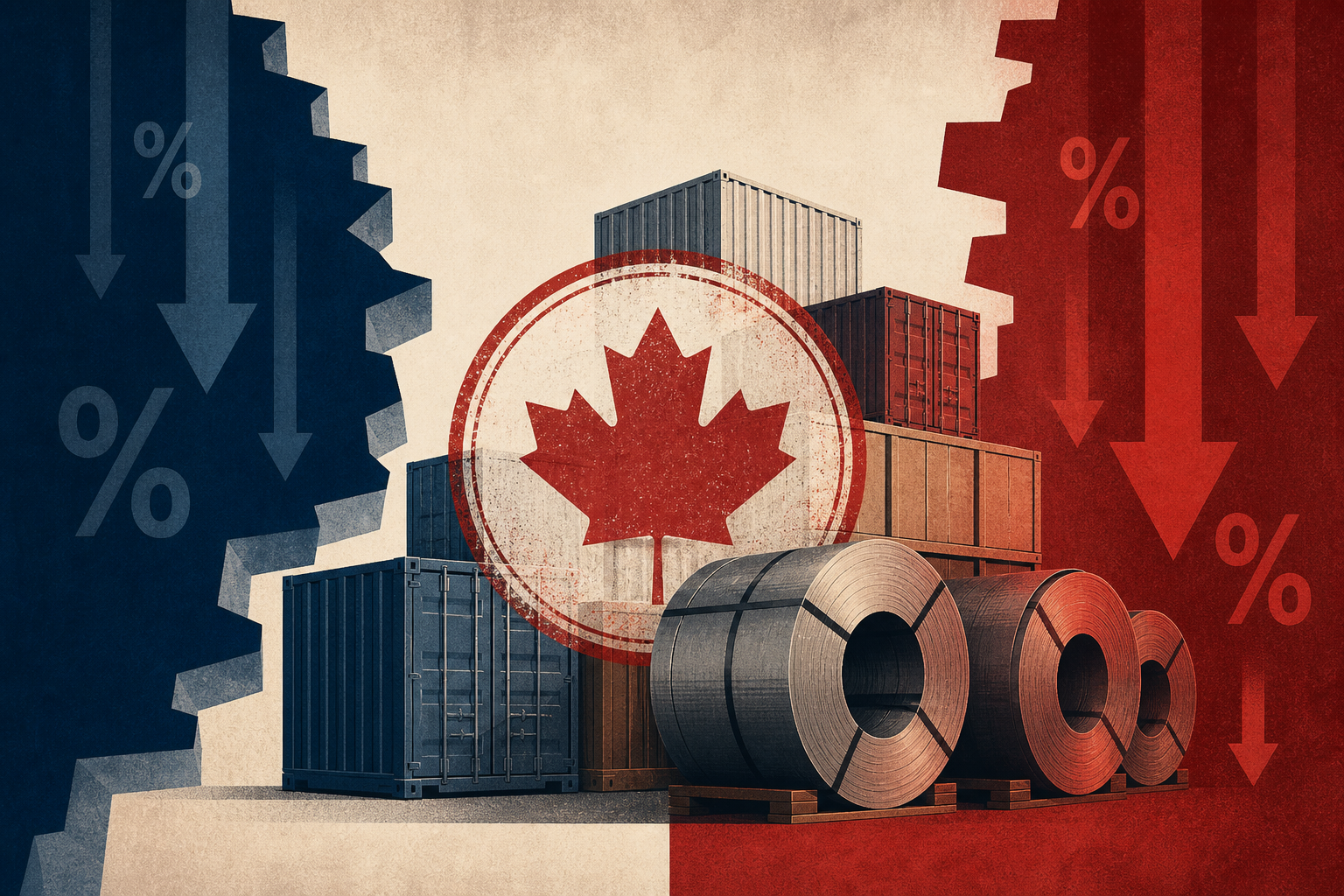
- Canada retaliatory tariffs were detailed Tuesday, Aug. 25, 2026: sliding-scale duties of 15%, 25%, and 50% on more than 700 U.S. product lines, framed as dollar-for-dollar matching of Trump’s weekend 50% package on Canadian goods. Coverage put the matched trade value near $20 billion (CNBC) to about $27.6 billion (CBC).
- Effective date: Sept. 8, 2026 — the Tuesday after Labor Day. Targets include steel and aluminum, dairy, seafood, appliances, wood and paper, apparel, tools, and motorcycles.
- Finance Minister François-Philippe Champagne also unveiled $7.5 billion in supports for workers and businesses. Trade Minister Dominic LeBlanc told CNBC Ottawa still prefers a deal — “we’re not waiting by the phone.”
Canada retaliatory tariffs stopped being a threat and became a schedule. Sept. 8 is now a customs date, not a talking point. Ottawa matched Washington’s weekend blast with a sliding 15–50% list and a $7.5 billion cushion for its own side — while Trump answered with Lake Ontario memes. That is how a five-day collapse of talks becomes a multi-month trade war.
What Ottawa announced Aug. 25
Cabinet ministers — Champagne, Industry Minister Mélanie Joly, Jobs Minister Patty Hajdu, and AI Minister Evan Solomon — unveiled Canada’s response in Ottawa. Champagne: “This is an unprecedented challenge imposed on Canada… We will meet the moment together.”
Core design:
- Dollar-for-dollar framing vs. Trump’s Aug. 22 50% duties on Canadian imports
- Sliding scale: 15%, 25%, and 50% depending on product line
- 700+ U.S. goods covered
- Start date: Sept. 8, 2026
Wire values differ slightly: CNBC cited about $20 billion mirroring Trump’s weekend package; CBC’s live coverage put the matched U.S. goods at about $27.6 billion. Either figure is large enough to reprice border invoices for importers on both sides.
Reporting: CNBC on Canada’s retaliatory tariffs, CBC live on the Ottawa announcement.
What the Canada retaliatory tariffs hit
Publicly named categories across Tuesday coverage:
- Steel and aluminum
- Dairy
- Seafood
- Appliances
- Wood and paper products
- Apparel / clothes
- Furniture
- Tools
- Motorcycles
Metals and wood were chosen partly to answer earlier U.S. steel, aluminum, and lumber duties — not only the weekend Section 338 blast on wine, cement, hockey sticks, and other consumer/industrial lines.
For U.S. exporters, Sept. 8 is the day Canadian customers start paying the new rates unless contracts already shifted sourcing. For Canadian retailers importing U.S. appliances and apparel, it is a margin and shelf-price problem.
The $7.5 billion worker and business package
Alongside the tariff list, Champagne announced $7.5 billion in federal supports for workers and businesses hurt by U.S. tariffs. The package is Ottawa’s admission that retaliation is not free — Canadian plants that sell into the U.S. already face 50% duties on a large goods basket, and counter-tariffs raise input costs at home.
Details will matter more than the headline: wage subsidies vs. loans vs. sector funds. Until the breakdown is published, treat $7.5B as a political floor under the trade-war narrative, not a full offset of lost export margin.
How we got here in five days
Compressed timeline:
- Aug. 19–21: Trump paused then collapsed a near-deal window on ~$20B Canadian goods — tariffs pause
- Aug. 22: U.S. 50% duties took effect after Carney suspended talks; Carney vowed Sept. 8 retaliation — Canada tariffs trade war
- Aug. 24: Trump threatened 50% on Canadian autos, parts, and steel for Jan. 1, 2027; Detroit sold off — GM stock, Tesla stock
- Aug. 25: Ottawa published the counter-tariff list and $7.5B supports
Carney had said Monday Canada might move from pure dollar-for-dollar matching to more targeted hits protecting Canadian workers. Tuesday’s list still used the dollar-for-dollar slogan while applying a sliding scale — targeted rates, matched scale.
Trump’s Tuesday response
Trump posted on Truth Social that Canada is “easily the most difficult and unreasonable” country he deals with, floated halting business with Ontario, and repeatedly suggested renaming Lake Ontario “Lake America.” He accused Canada of targeting U.S. farmers and complained about the U.S. trade deficit with Canada — a deficit driven largely by U.S. purchases of Canadian crude.
Rhetoric does not change Sept. 8 rates. It does raise the political cost of any restart before the Jan. 2027 auto cliff.
LeBlanc: still open to a deal
Trade Minister Dominic LeBlanc told CNBC’s Squawk Box Tuesday morning Ottawa did not want to abandon talks:
Our preference was to find a deal that benefits both countries. We still believe that’s possible. But in the meantime, we’re not waiting by the phone.
That is the dual track: retaliate on schedule, leave the door cracked. Markets will price the schedule until a signed text appears.
Autos, steel, and cross-border plants
Tuesday’s list leans consumer and metals more than a full auto-parts war — but the auto sector remains the fuse:
- GM, Ford, and Stellantis run major Ontario assembly feeding U.S. dealers
- Trump’s Jan. 1, 2027 50% threat on Canadian vehicles, parts, and steel still hangs over those plants
- Steel/aluminum in Canada’s counter-list raises costs for fabricators on both sides of the border
USMCA renewal talks get harder every week this stack stays live. Integrated supply chains cannot re-source by Sept. 8; they can only reprice.
Calendar through Sept. 8 and Jan. 2027
Importer/exporter checklist:
- Now – Sept. 7: U.S. 50% duties on the weekend Canadian goods basket remain in force
- Sept. 8: Canada retaliatory tariffs begin — confirm HTS lines and rates on the official list when published in full
- Jan. 1, 2027: Trump’s posted 50% on Canadian autos, parts, and steel — unless a deal intervenes
- Near-term macro: U.S. equities brushed off tariff headlines Tuesday morning while focusing on NVIDIA/PCE — trade pain hits customs desks before it hits the S&P
Canada retaliatory tariffs are no longer “Carney vows.” They are a Sept. 8 rate card, a $7.5 billion domestic cushion, and an open invitation to negotiate that Trump answered with lake-name trolling. Until someone blinks, the border is a tax line with two calendars — one next month, one next New Year.
News and policy commentary only. Tariff schedules and product lists change. Confirm CBSA and USTR notices before import planning. Not legal or investment advice.