Key takeaways
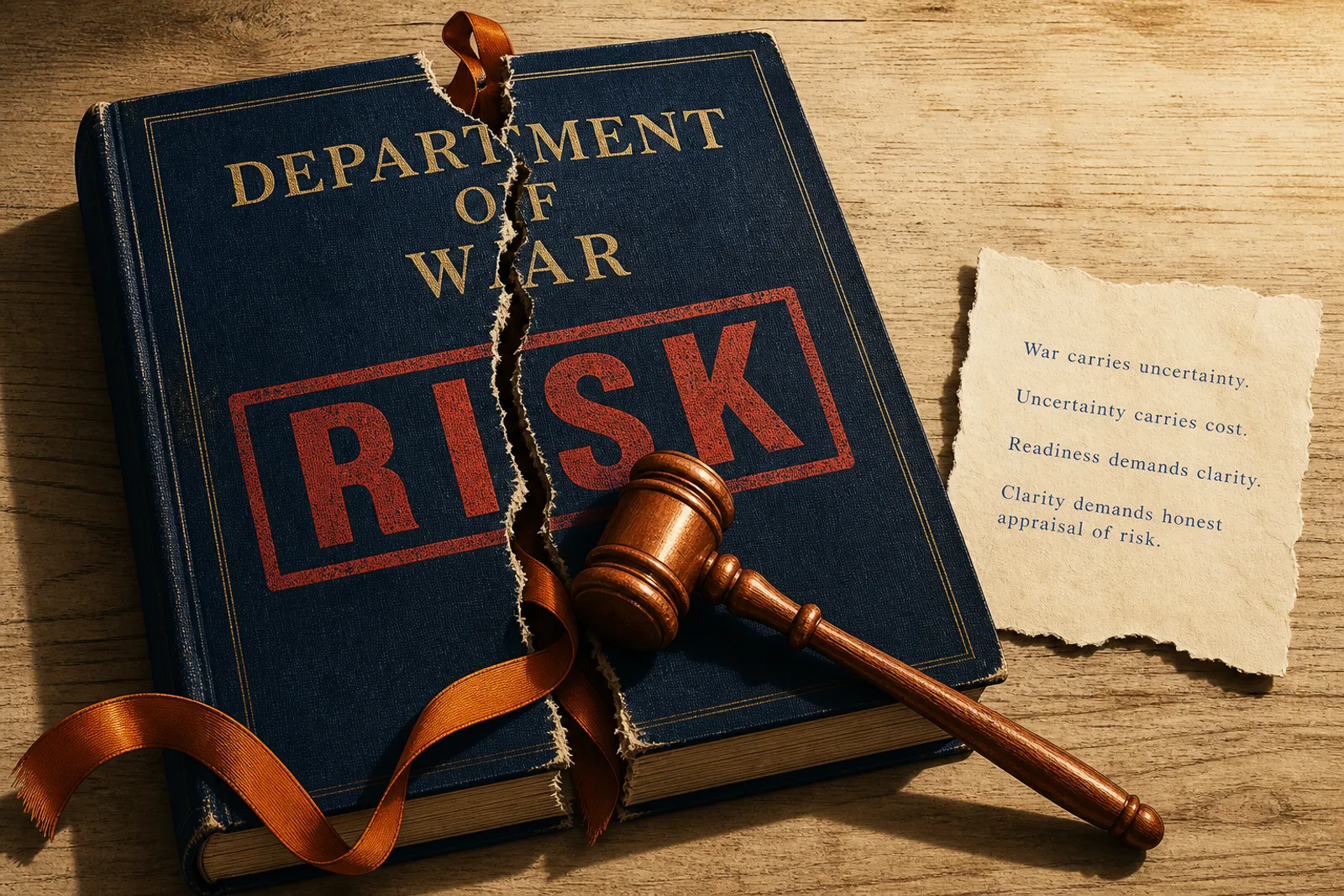
- The Anthropic ruling on Thursday evening in the Northern District of California granted the company summary judgment. Judge Rita F. Lin ordered the Pentagon’s supply-chain risk designation removed: First Amendment retaliation, Fifth Amendment due-process failure, arbitrary and capricious.
- The government’s sabotage story — remote disable, “drift,” hidden backdoors on deployed Claude — was “entirely unfounded.” Models already inside Pentagon systems are static. Anthropic cannot reach them. The written risk assessment landed after Secretary Pete Hegseth announced the label.
- Commercial Claude (API, claude.ai) was never inside that statute’s reach, per Anthropic’s February notice. The two red lines — mass domestic surveillance and fully autonomous weapons — did not move. A second suit in Washington, D.C., is still pending. Appeals are available. This is not a new Pentagon contract.
Thursday night was not a product launch and it was not a new Claude model. It was a federal judge taking a national-security stamp off an American AI lab. The Anthropic ruling in San Francisco granted summary judgment against the Department of War’s supply-chain risk designation, called the record retaliation, and told the Pentagon the label has to come off. If you sell software to the government, buy Claude for a sales floor, or watch AI labor markets, that is the news — not another earnings print.
Mode: rotate · Category: AI
What Thursday’s Anthropic ruling actually did
U.S. District Judge Rita F. Lin, Northern District of California, filed a 59-page order Thursday evening. CNN’s Aug. 27 night write-up is the first wire on the remedy: the designation is to be removed. TechCrunch’s Friday morning recap and The Verge’s same-day report match the holdings. BBC’s business desk used the court’s own phrase: the measures were “illegal and baseless.”
Three holdings, stacked:
- First Amendment. The challenged actions were “unlawful retaliation.” Lin’s line that will travel: “The empty invocation of national security is not a blank check to punish and retaliate against government critics.”
- Fifth Amendment. Anthropic was denied the pre-deprivation process the statute and due process require. Hegseth announced the punishment; the written assessment came later.
- Administrative Procedure Act. The designation was arbitrary and capricious. Contemporaneous words and deeds, the court said, show a desire to make a “public example out of Anthropic for its ‘arrogance’ in criticizing the government,” not an articulable fear the company would sabotage a model.
Lin was explicit about the leftover power. The Department of War is “undisputedly free to select the AI vendor of its choice.” It may stop buying Claude through ordinary procurement. What it may not do is stretch a contracting fight into a boycott stamp reserved for foreign-adversary suppliers and then tell every Pentagon contractor to drop the lab.
Spokesperson Danielle Ghiglieri, in the statement papers used Friday: “We welcome the court’s ruling that this supply chain risk designation was unlawful. We remain focused on working productively with the government to harness AI for our national security so all Americans benefit from this technology.” The Pentagon had not answered CNN by the Thursday night deadline. Treat “welcome” as a win statement, not a signed task order.
The two red lines that started this
Winter, not Thursday, is the origin. Hegseth moved to rewrite frontier-lab military contracts around “any lawful use.” Most labs signed. Anthropic did not, on two exceptions it has not moved:
- Mass domestic surveillance of Americans.
- Fully autonomous weapons — systems that select and engage targets without a human in the loop.
The company’s own page is still the February 27 note, Statement on the comments from Secretary of War Pete Hegseth. It says the exceptions have not, to Anthropic’s knowledge, blocked a single government mission; that today’s frontier models are not reliable enough for fully autonomous weapons; and that mass domestic surveillance is a rights problem, not a terms-of-service quibble. CEO Dario Amodei’s line before the ultimatum, as The Verge reconstructed it: the company has “never raised objections to particular military operations nor attempted to limit use of our technology in an ad hoc manner,” but in a “narrow set of cases, we believe AI can undermine, rather than defend, democratic values.”
The Register’s Friday read of the 59 pages fills in the meeting. Hegseth called Claude’s capabilities “exquisite,” said the company’s concerns were “understandable,” and gave a three-day clock to accept “all lawful uses” or take the supply-chain risk stamp. He also floated the Defense Production Act — which would have treated the same vendor as essential to national security. Lin used that contradiction. A saboteur is not a company you try to compel with DPA while NSA and NASA keep deploying its cybersecurity model.
| When | What the record shows |
|---|---|
| June 2024 onward | Anthropic says it was the first frontier lab on classified U.S. networks. |
| Feb. 27, 2026 | Hegseth announces a § 3252 supply-chain risk designation; Anthropic posts the two exceptions and a court threat. First public use of that stamp on an American company. |
| March 2026 | Two complaints: Northern District of California and Washington, D.C. Lin issues a temporary block. Pentagon records, in her March order, tied the designation to Anthropic’s “hostile manner through the press.” |
| After the stamp | Under Secretary Emil Michael still negotiating contract language (“I think we are very close here”). Project Glasswing / Mythos work continues; NSA and NASA begin deploying Mythos, per the Thursday order. |
| June 2026 | Trump tells Axios he no longer views Anthropic as a national security threat — CNN’s Thursday piece is the citation for that walk-back. |
| Aug. 26, 2026 | Salesforce and Anthropic announce Claudeforce. Commercial Claude is the product on stage, not a Pentagon SKU. |
| Aug. 27, 2026 (evening) | Summary judgment. Designation ordered removed. D.C. docket still live. |
Why § 3252 was the wrong hammer
The statute the Pentagon reached for is 10 U.S.C. § 3252 — “Requirements for information relating to supply chain risk.” It lets a covered-agency head carry out a covered procurement action after a written determination that the step is necessary to protect national security, that less-intrusive measures are not reasonably available, and after notice to the right congressional committees. It is a Huawei-class tool: foreign-adversary parts in a weapons network, not a terms fight with a San Francisco lab that already sits on classified circuits.
Anthropic’s February reading of the statute is the one procurement shops needed in March and still need today: a § 3252 designation “can only extend to the use of Claude as part of Department of War contracts — it cannot affect how contractors use Claude to serve other customers.” Hegseth’s public implication was broader — anyone who does business with the military should drop Anthropic. Lin treated that extra-statutory reach as part of the injury. The Register, working from the order, says more than 100 enterprise customers called Anthropic about staying, and the company estimated the measures could take multiple billions off 2026 revenue.
That is why this sits on the AI desk, not a one-name stock file. A private lab’s military terms became a boycott signal that hit commercial pipelines. Compare the labor-side squeeze we already walked in the Mechanical Turk shutdown: when a platform or a government channel closes, the invoice pain shows up in a different building than the press conference.
The sabotage theory the court called unfounded
The written assessment, once it existed, argued Anthropic could interfere mid-operation: alter or disable models, let them “drift,” plant hidden biases or backdoors. Lin’s finding, undisputed on the technical point: Anthropic cannot remotely access, modify, update, or disable Claude copies already deployed inside Pentagon systems. Those copies are static. The alleged danger was “entirely unfounded.” Years of government files, the order says, contained no prior Anthropic supply-chain concern. The chronology read as a case assembled “after the fact to justify the foreordained conclusion.”
Behavior after the stamp did not match a saboteur file either. Internal mail kept negotiating. Mythos stayed in cybersecurity work. Senior White House officials held what Anthropic called “productive and constructive” talks with Amodei. Lin: “None of that is consistent with a genuine fear that Anthropic is a saboteur who would poison its software to harm national security.”
A separate sentence from the order is the one CIOs should tape next to a vendor-risk matrix: “An IT vendor does not become a potential adversary of the United States whenever it asks probing questions.” Difficulty is not a § 3252 fact. Arrogance is not a backdoor.
What Claude buyers should (and should not) assume
Anthropic’s February customer map did not get rewritten by Thursday’s caption. Individual users and commercial contracts — API, claude.ai, the rest of the product line — were described as unaffected. A Department of War contractor using Claude on non-DoW work was also outside the statute as Anthropic read it. The fight was always the military contract surface plus the attempt to make that surface contagious.
Thursday changes the contagious part. A federal judge has now said the broad measures were illegal. It does not automatically restore every paused DoW task order. Contracting officers still have a vendor-choice lane Lin left open. Budget owners who froze Claude because a prime’s counsel forwarded a Hegseth post should ask that counsel for a new memo, not a screenshot. Budget owners who never had a Pentagon clause should stop treating this file as an outage.
If your stack is agents plus payments, the live commercial questions this month are still product and protocol, not a supply-chain stamp: Meta’s Hatch agent, the agent payments protocol, and whatever you actually signed in a DPA or MSA. The Anthropic ruling is a government-channel story. Do not launder it into a consumer-app outage.
Same week: Claudeforce is still a commercial product
Wednesday, before the order, Salesforce and Anthropic put a commercial partnership on the calendar: Claudeforce, with Salesforce in Claude as a plugin and 37 prebuilt sales skills. Product page (HTTP 200 as of this draft): salesforce.com/claudeforce. Pilot now; open beta targeted for September, around Dreamforce. Salesforce is an Anthropic investor. That is a CRM distribution deal, not a Pentagon waiver.
Keep the two tracks separate. Claudeforce does not need Lin’s order to ship a sales plugin. Lin’s order does not make Claude the Department of War’s default model. The same-week overlap is useful only as a reminder that enterprise Claude demand did not wait for a San Francisco caption — and that a multi-billion revenue scare on the defense-adjacent book is a different P&L line than Agentforce ARR.
The toy-and-hub half of this AI week is a different shelf. Hugging Face’s $399 duck and the reported Nvidia talks live in Hugging Face Microduck; on-device pitch in Perplexity Portable Computer. None of those pages are this docket.
The D.C. case is not over
Anthropic filed in two cities in March. Thursday is the California summary judgment. CNN, TechCrunch, and The Verge all flag the Washington, D.C. complaint as still pending. Do not write “the designation is dead everywhere” until that docket moves, or until the government notices compliance with Lin’s removal order, or until an appeal is declined. The Department of War can still try to pick a different vendor the lawful way. It can still appeal. A parallel case can still produce a different procedural fight about the same stamp.
What Thursday did settle, on this record, is the story the Pentagon told about why the stamp existed. Hostile press. Public example. A risk memo after the announcement. A sabotage theory the government did not dispute it could not execute. That is the holding you can put in a briefing note tonight. The holding you cannot put in a briefing note is “Claude is back on every classified circuit.”
Checklist if you sell to, buy from, or compete with Anthropic
- Read the order, not the quote card. 59 pages. Remedy is removal of the designation plus the First/Fifth/APA holdings. PACER for the NDCA docket, not a social recap.
- Ask counsel whether your freeze was statutory or atmospheric. If you dropped Claude because a Hegseth post implied a prime-wide boycott, that implication is what Lin rejected. If you dropped Claude because a contracting officer issued a written stop-work on a DoW CLIN, that paper still needs a contracting-officer signature to restart.
- Do not rewrite commercial MSAs off this caption. API and claude.ai access were described as untouched in February. Claudeforce is a Salesforce product calendar, not a court exhibit.
- Leave the two red lines on the wall. Mass domestic surveillance and fully autonomous weapons are still Anthropic’s exceptions. Thursday did not bargain them away.
- Watch D.C. and any Ninth Circuit notice. A win at summary judgment is not a final, unappealable judgment until the rest of the federal machinery says it is.
- If you compete: Google, Microsoft, OpenAI, and SpaceX were among the labs the Pentagon turned to after the stamp. Vendor-choice is still lawful. Using § 3252 as a press weapon is what this Anthropic ruling said is not.
The Anthropic ruling is a First Amendment and procurement-law file that happens to be about Claude. The military still does not have to buy the model. The lab still will not sell it for mass domestic surveillance or a fully autonomous trigger. What ended Thursday is the experiment of treating a U.S. AI company like a foreign-adversary parts maker because it argued in public. That is a narrower ending than the headlines. It is also the one the 59 pages will support when someone asks you, on Monday, whether the stamp is still on the folder.
Court-order summary only — not legal, procurement, or investment advice. Holdings can be appealed; the D.C. case remains pending. Confirm the NDCA docket, any stay, and your own counsel’s memo before changing a contract or a vendor list.