Key takeaways
- A bitcoin-backed mortgage from Better Mortgage and Coinbase moved to general availability on Aug. 26, 2026. Waitlist demand was pitched at more than $260 million in projected loan volume.
- Structure: a standard Fannie Mae first lien on the house plus a separate down-payment loan secured by pledged BTC (250% collateralization) and a second lien. Bitcoin is the launch collateral only.
- BTC price swings do not trigger margin calls. Stay 60 days delinquent and Better may liquidate the pledged coins. Coinbase One members can get a Better-paid closing credit of 1% of the loan, capped at $10,000.
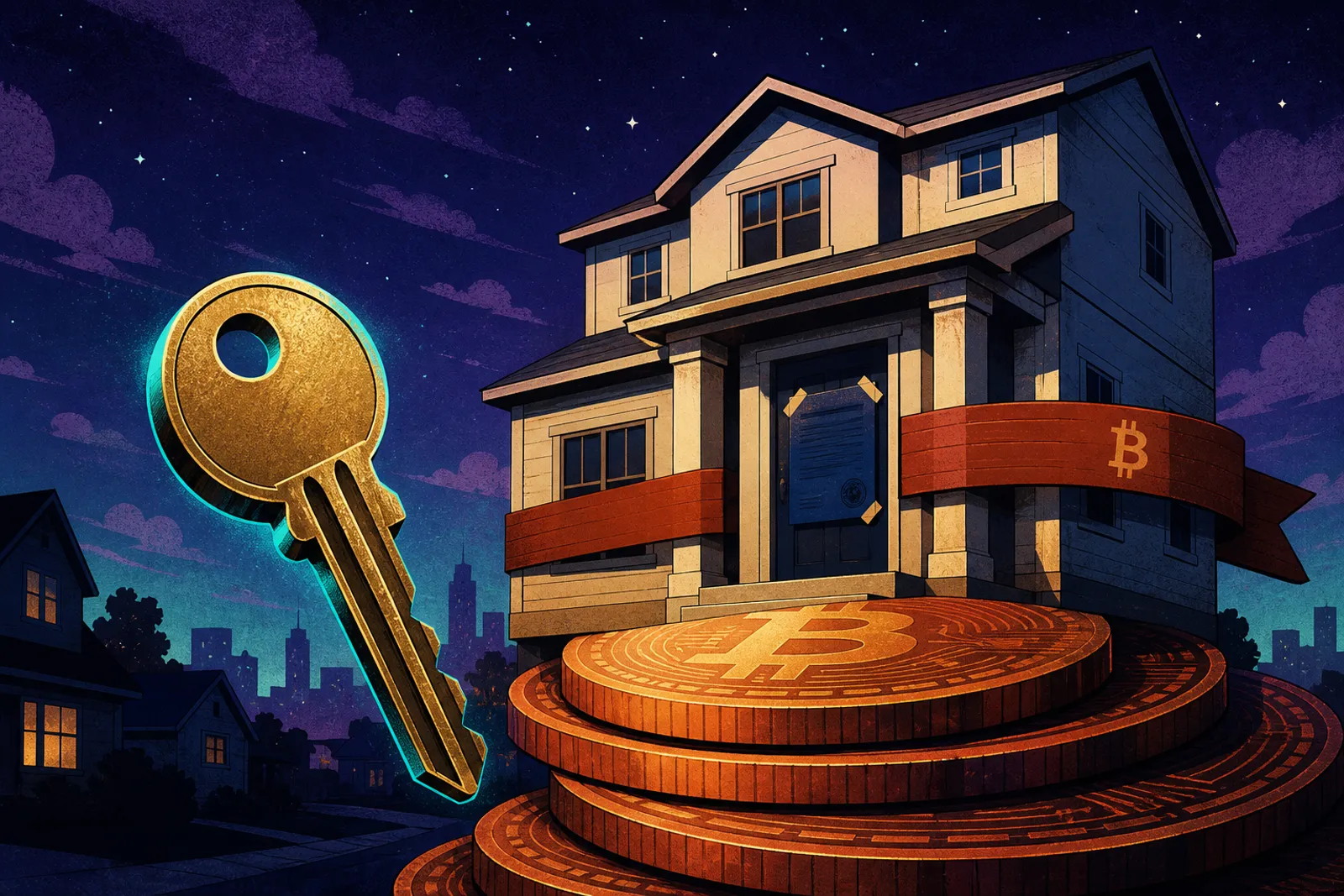
You do not wire Bitcoin to a closing table. You pledge it, borrow dollars against it, and let those dollars satisfy the down payment that Fannie Mae will actually buy. That is the bitcoin-backed mortgage Better Mortgage (Nasdaq: BETR) and Coinbase (Nasdaq: COIN) took off the waitlist this week.
Mode: rotate · Category: Crypto
The bitcoin-backed mortgage that opened Aug. 26
The companies’ Aug. 26 investor release calls the product the first token-backed, conforming mortgage: originated and serviced by Better, powered by Coinbase, first lien written to Fannie Mae guidelines. Product page: better.com/crypto-backed-mortgages. Coverage the next morning: Bitcoin.com’s Aug. 27 wrap.
The waitlist, opened in June, is the demand print they wanted to show: 76% of respondents already paid for Coinbase One, 60% said they planned to buy a house within six months, and the companies put projected volume above $260 million before general availability. Better CTO Ziggy Jonsson used the 2025 housing hangover as the setup — high rates, record prices, thin inventory, median first-time buyer age pushed to 40 — and the onchain-wealth pitch as the punchline: pledge instead of sell.
March was the soft launch. August is the “start an application today” line on Better’s FAQ. That is the news, not another $80,000 Bitcoin tape reprint. Price context still matters for anyone about to lock coins for 15 or 30 years — see this week’s Bitcoin near $80,000 and the institutional bid in Bitcoin ETF inflows — but this desk is the mortgage plumbing.
Two loans, one monthly payment
Better’s FAQ is the cleanest schematic. You close two loans at once:
- Loan 1 — conforming first lien. Standard Fannie Mae mortgage on the house. 15-year or 30-year fixed. Eligible property types are the usual GSE list: single-family, condo, townhouse.
- Loan 2 — down-payment loan. Dollars that cover the cash down payment. Secured by the Bitcoin you pledge and a second lien on the same house.
Coinbase’s mortgage help page says both loans share the same interest rate and amortization term, so you send one combined monthly payment. Coinbase moves the coins into Better’s custodial account on Coinbase Prime. Coinbase does not originate or service the mortgage. Better underwrites credit, income, and the rest of a normal file.
Worked example from Better: a $500,000 purchase, you do not want to write a cash check for the down payment. Pledge $250,000 of Bitcoin plus the second lien and the down-payment loan can cover $100,000 — 20% down on the conforming first lien. The coins sit in custody until that down-payment loan is repaid.
This is not “Fannie Mae now takes Bitcoin.” The GSE still buys a dollar mortgage. The crypto risk sits on Better’s second loan.
The 250% collateral math
Launch collateral is Bitcoin only. ETH and SOL are listed as possible later additions, not live options. The ratio is fixed in the marketing math: pledged BTC must be worth at least 250% of the down-payment loan — a 40% advance against the coins.
| If you pledge | Down-payment credit (40%) | What that 20% down supports (illustrative) |
|---|---|---|
| $100,000 BTC | $40,000 | $200,000 purchase |
| $250,000 BTC | $100,000 | $500,000 purchase |
| $500,000 BTC | $200,000 | $1,000,000 purchase (still subject to conforming-loan limits and underwriting) |
Better’s on-page calculator compares that structure with selling coins. In their sample, selling $30,000 of Bitcoin to help a $50,000 cash down payment also books a $6,000 capital-gains haircut at a 20% rate — a classroom number, not your bracket. The pledge path keeps the coins and the cash you would otherwise wire. Tax treatment is fact-specific; the Sept. 15 estimated-tax calendar is the reminder if you do sell instead of pledge. This article is not tax advice.
Why Fannie Mae still wants dollars
Fannie’s selling guide has said the same thing since 2022. B3-4.1-04, Virtual Currency: coins exchanged into U.S. dollars and sitting in a U.S. or state-regulated institution can fund down payment, closing costs, and reserves. Raw virtual currency cannot. Earnest money cannot be paid in crypto. Large deposits from an exchange need a paper trail back to the borrower’s wallet.
The bitcoin-backed mortgage is a bypass, not a rewrite. Loan 2 manufactures the dollars Loan 1 needs, so the first lien can look like every other conforming note Fannie will purchase. If you skip the pledge and just cash out BTC, you are back inside B3-4.1-04: convert, bank, document, maybe season the deposit. Better’s FAQ flags that liquidation path too — converted dollars can be a qualifying asset without a pledge, subject to Fannie seasoning rules.
Price drops vs missed payments
This is the feature they will repeat in every interview, because it is the opposite of a Coinbase USDC borrow against Morpho. On those loans, LTV health can go to liquidation when collateral falls. On this mortgage product, Better’s FAQ is blunt: Bitcoin price volatility has no impact on either loan. No top-up. No margin call. A 40% drawdown in BTC does not force a sale if you keep paying.
Missed payments are a different clock:
- Day 1 after a miss — delinquency starts
- 30 days — cure window to bring the account current
- 60 days — Better may liquidate pledged Bitcoin
- 180 days — foreclosure process on the house, aligned with Fannie Mae timelines
You can lose the coins for nonpayment long before anyone posts a foreclosure notice. That is the trade: volatility does not liquidate you; a skipped ACH might. Compare that with a classic crypto margin loan, which can sell you on a red candle even when every bill is current.
Coinbase One credit and who can apply
You need a verified Coinbase account that can send BTC into Better’s Prime custody, and you need to clear Better’s credit and income tests. This is still a mortgage. A Coinbase login does not replace a credit file — the same underwriting gravity we covered on Gen Z credit scores and credit utilization.
Coinbase One is the rebate layer, not the on-ramp. If Better approves the loan, One members get a lender credit equal to 1% of the loan amount, max $10,000, applied against closing costs on the closing disclosure, paid by Better. The Aug. 26 release extended that 1% credit across Better’s other home-finance products — standard mortgages, HELOCs, refinances — with the broader One offer dated Aug. 12. A $800,000 first lien would pencil an $8,000 credit; the $10,000 cap bites above $1 million.
Application lives on Better’s site, not inside the Coinbase app as a one-tap borrow.
What you give up when you pledge
The coins stop being yours to trade. Better holds them in its Coinbase Prime custodial account for the life of the down-payment loan. You get them back when you pay off or refinance, or when a home sale pays the down-payment loan and the coins are released. There is no “borrow against BTC, keep trading it.”
Other frictions the FAQ and the IR letter do not hide if you read them in order:
- Two loans, two interest stacks. Same rate and term, still more principal than a cash-down conforming loan. You are financing the down payment.
- Second lien on the house. The coins are not the only collateral. Default is a real-estate event as well as a crypto event.
- Custody concentration. Prime is institutional-grade. It is still one custodian, one lender, one platform pair.
- Opportunity cost the other way. If Bitcoin rips, you kept the upside — that is the pitch. If you needed those coins for something else in year four, they are locked.
- Launch asset is BTC. A portfolio that is mostly ETH or SOL does not fit until Better says it does.
Jonsson’s line about wealth that “lives onchain” is the consumer-crypto story. The legal story is still two promissory notes and a GSE first lien. Read both.
Checklist before you move BTC
- Confirm live terms on Better’s product page — ratios, collateral list, and One-credit conditions can change.
- Run the 250% test — down payment × 2.5 in BTC, sitting in Coinbase, not on another exchange.
- Price the second loan — get the combined monthly payment in writing; do not compare it only to a 20% cash-down quote.
- Credit file first — underwriting still happens; a 60-day delinquency clock is unforgiving if the payment was sized to a bonus that might miss.
- Tax fork — pledge vs sell is a CPA question, especially if your cost basis is tiny. Selling is a 2026 taxable event; pledging is a lien event.
- Exit plan — refinance, sale, or 30 years of custody. Pick one before the API transfer.
- One membership — if the $10,000 closing credit is part of the math, confirm you qualify before you lock.
The bitcoin-backed mortgage that opened this week is a two-loan machine built so Fannie never has to hold a satoshi. That is clever structure, not free money. If you can write the down payment in cash and would rather not put a second lien on the house, this product is not for you. If the coins are the down payment and selling them is the thing you refuse to do, Aug. 26 is the first time a conforming first lien and a BTC pledge have been sold as a retail package with a waitlist already north of a quarter-billion dollars. Read the FAQ. Then read the note.
Informational only — not mortgage, tax, or investment advice. Loan terms, collateral rules, and Coinbase One credits can change. Confirm live disclosures with Better and Coinbase before you apply or transfer Bitcoin.