Key takeaways
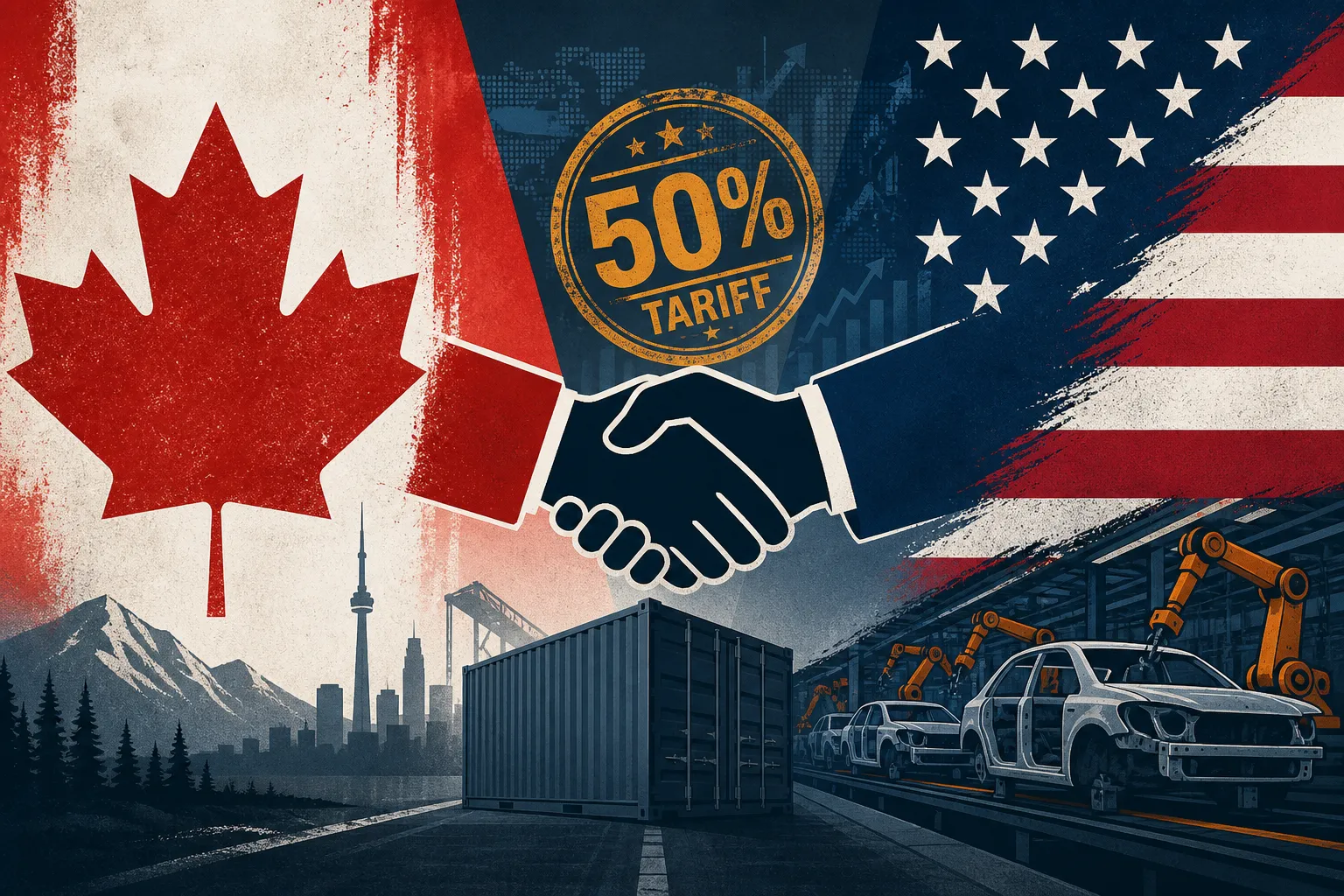
- President Trump posted on Truth Social late Tuesday that he paused 50% Canada tariffs scheduled for Wednesday morning, giving negotiators a three-day window while documents are finalized. Canadian Prime Minister Mark Carney confirmed the pause runs until end of day Aug. 21.
- The threatened levy would apply to roughly $20 billion of Canadian imports — unlike earlier rounds, sources told Reuters these tariffs would hit even goods that normally qualify for preferential treatment under the US-Mexico-Canada Agreement (USMCA).
- Auto tariff levels are still unresolved. Reporting from Washington and Ottawa points to Canada pushing a cut from the current 25% U.S. tariff on imported Canadian vehicles and parts toward something closer to 10–15% — the number that could make or break a final signature.
Canada tariffs jumped to the top of search charts on Aug. 19 because the headline number — 50% — landed less than two hours before it was set to take effect. Trump said the U.S. and Canada have a deal “subject to the finalization of documents.” Carney said “substantial progress” is real but incomplete. That gap between a social post and signed text is why markets, automakers, and grocery distributors all refreshed their dashboards at once.
What Trump announced late Aug. 18
Trump’s post stated he paused the 50% tariffs against Canada that were scheduled to kick in Wednesday morning for a three-day period, citing a pending bilateral agreement. Speaking to reporters at the White House on Aug. 19, he said he agreed to the delay at Canada’s request and described talks as producing a “very fair deal for both” sides — while repeating that everything remains subject to document finalization.
The timing mattered. Importers planning container bookings and auto part shipments for the fall model year had been working against a hard Aug. 19 clock. A pause measured in hours, not weeks, still resets logistics math: customs brokers can hold entries, but they cannot assume the rate will stay at zero past Saturday.
Primary source coverage: BBC on the three-day pause, CBS News on Carney’s statement, and ABC News on unresolved terms.
What the 50% Canada tariffs would hit
Reporting consistently puts the threatened package at about $20 billion of Canadian goods — not the entire cross-border trade flow, but a slice large enough to move prices on shelves if it sticks. The U.S. Chamber of Commerce argued ahead of the deadline that higher Canada tariffs would “damage both economies, drive up costs for U.S. families, further disrupt critical supply chains, and risk the 13 million American jobs that depend on trade under” USMCA.
Canada is the United States’ second-largest trading partner. The relationship runs through autos, energy, agriculture, lumber, and industrial components that cross the border multiple times before a finished product ships. A 50% rate on a targeted list behaves differently from a broad universal tariff: it punishes specific SKUs and provinces first, then ripples through contract renegotiations.
Carney framed Ottawa’s posture as building “a stronger, more independent, and more competitive economy at home” while talks continue — language that signals Canada will not simply accept U.S. terms because the clock ran out.
Carney’s response and the new deadline
Carney’s office said Trump and the prime minister spoke twice in the week leading into the deadline, with negotiators in intense talks since July. In his Aug. 18 statement, Carney confirmed the U.S. agreed to postpone implementation of the 50% levy under Section 338 of the U.S. Tariff Act of 1930 until end of day, Aug. 21.
That gives a new hard stop at 12:01 a.m. ET Saturday, Aug. 22 — the moment after Carney’s “end of day Aug. 21” language. Importers should treat published government notices and U.S. customs bulletins as the authoritative clock, not a headline paraphrase. When in doubt, check the Federal Register entry and your broker’s summary before the window closes.
Canadian and U.S. trade representatives met in Washington on Wednesday morning after the pause, according to wire reports — a sign the “deal” is still being written, not filed.
Auto tariffs remain the sticking point
Automotive trade is the loudest industry voice in this round. The U.S. currently applies a 25% tariff on imported Canadian vehicles and parts in the broader trade fight. Reuters cited sources saying Canada is pushing to reduce that rate to 10%, while other reporting suggested a landing zone near 15% — either figure would be a major shift from 25%, but the spread between 10 and 15 is billions of dollars across a model year.
Ontario’s government has been explicit about protecting auto assembly jobs; Quebec focuses on dairy supply management; British Columbia on softwood lumber. A federal deal in Ottawa does not automatically satisfy provincial politics. Carney cannot simply order provinces to reverse retail policies the White House wants changed — that structural limit is why “we have a deal” and “here are the signed annexes” are different sentences.
If you buy a new vehicle in the next 12 months, watch whether the final text moves sticker prices on Canadian-built crossovers and trucks. Tariffs are not paid at the factory gate; they flow through invoice chains.
Section 338 vs USMCA preferential rates
Earlier tariff rounds often still respected USMCA preferential treatment for qualifying goods. Sources describing this package said the threatened 50% Canada tariffs would apply regardless of USMCA eligibility — a sharper tool than renegotiating the pact line by line.
Section 338 authority is part of why Trump could threaten a fresh levy without reopening the entire USMCA text. It also explains why business groups treated this deadline as distinct from prior rounds: importers who built compliance around USMCA certificates cannot assume those certificates shield them from this specific list.
Trump has used tariff threats to extract concessions before — including during his first-term USMCA negotiation. The pattern is leverage first, legal text second. Markets price the pattern until ink dries.
Who actually pays border taxes
Tariffs are collected at the border from U.S. importers, not foreign governments. An importer facing a 50% rate either absorbs the margin hit, renegotiates supplier pricing, or passes the cost forward. Economic studies consistently find consumers bear a meaningful share over time, especially on differentiated goods with few substitutes.
That is why the U.S. Chamber framed the Aug. 19 deadline in household terms — “costs for U.S. families” — rather than as a purely diplomatic dispute. Grocery, hardware, and auto parts distributors with Canadian SKUs in their catalogs had been modeling scenarios for weeks.
What happens if Aug. 21 passes without a deal
If documents are not finalized and the pause expires, the 50% Canada tariffs on the targeted roughly $20 billion import basket are scheduled to take effect. Importers would need to file entries at the new rate or pull shipments back to port storage — expensive either way.
Trump told reporters he believes the relationship with Canadian leadership is constructive right now. Carney says important work remains. Both can be true: personal rapport does not substitute for annex language on auto rates, dairy market access, or provincial retail restrictions.
Negotiators also face U.S. political timing. Heavy new border taxes that raise consumer prices weeks before November midterms are a calculation every White House makes, whether or not officials say so out loud.
Next checkpoints: signed joint statements, U.S. Trade Representative fact sheets, Canada Department of Finance releases, and customs guidance from U.S. CBP. Until those publish, treat the Truth Social post as direction, not law.
News analysis only. Tariff rates, deadlines, and trade law change with official publication. Verify current CBP, USTR, and Government of Canada notices before making import, pricing, or investment decisions. Not legal or tax advice.