Key takeaways
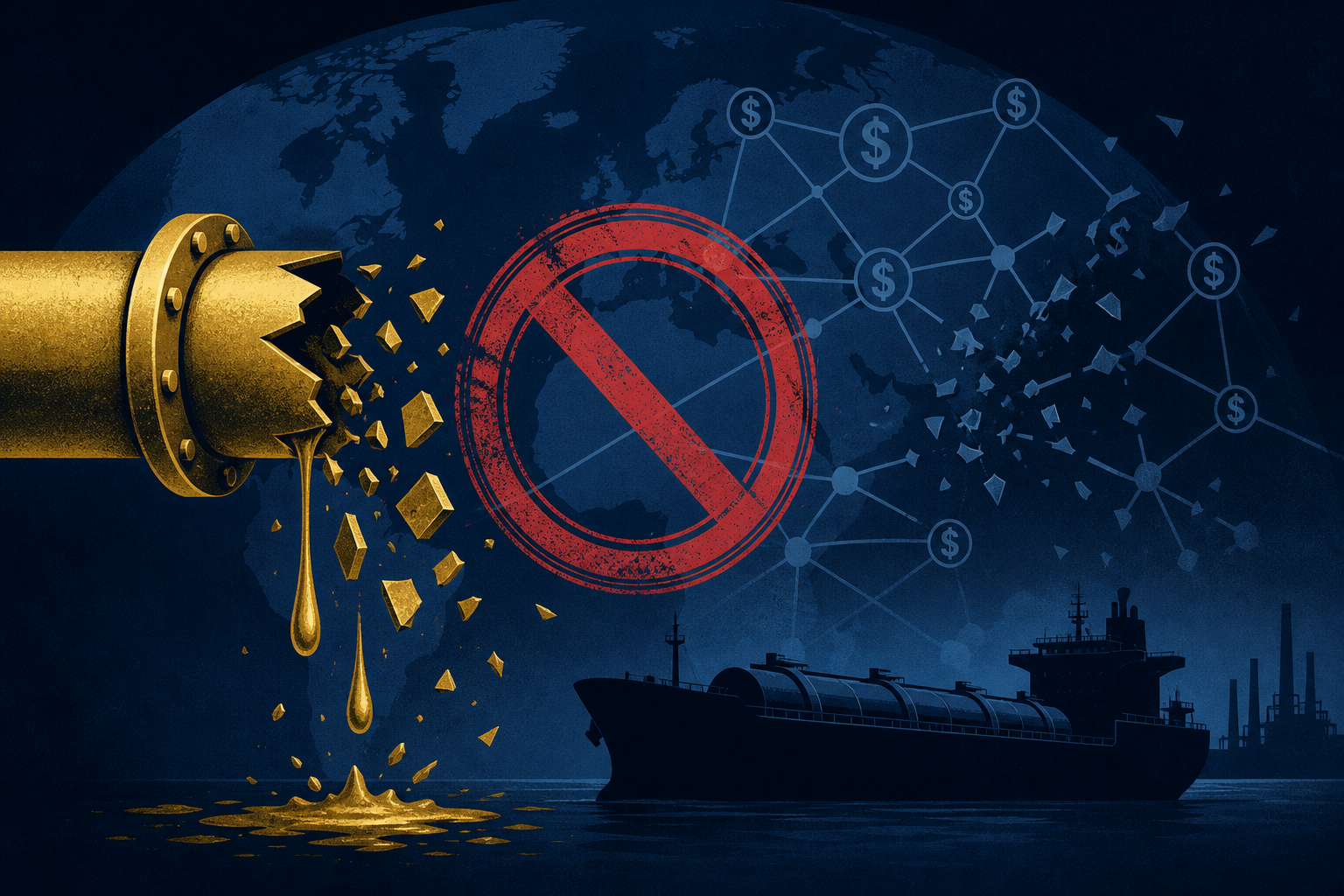
- Treasury Secretary Scott Bessent launched Operation Economic Outcast on Monday, Aug. 24, 2026 — a whole-of-government Iran sanctions campaign he framed as an economic “D-Day” to sever Tehran’s global revenue pipelines.
- New sectoral determinations target digital assets, technology, gold, aviation, and shipping. OFAC sanctioned more than 60 entities, individuals, and vessels across the UAE, Hong Kong, Singapore, Switzerland, and Europe tied to oil revenue, missile tech, and cyber operations.
- Bessent warned facilitators of Iranian money laundering could be removed from the U.S. dollar system and previewed a major financial institution sanction by week’s end. Brent crude fell ~2.4% to near $92.17; Iran’s rial hit a record low near 2.02 million per dollar.
Iran sanctions searches spiked Monday because Washington stopped managing the conflict in press-release language and started marketing a named campaign. Operation Economic Outcast is Treasury’s bid to choke every external lifeline — oil smuggling, gold routes, crypto rails, shadow-fleet shipping — while telling third countries they have a deadline to comply or share Tehran’s isolation. Markets treated it as serious rhetoric with incremental immediate enforcement: oil sold off, equities wobbled, and the rial broke another floor.
What Operation Economic Outcast is
From the Treasury Cash Room on Aug. 24, Bessent announced that at President Trump’s direction the department had begun Operation Economic Outcast — described in official remarks as an “unprecedented, whole-of-government, economic campaign against the Islamic Republic of Iran and its enablers.”
The WWII analogy is deliberate. Bessent compared the launch to D-Day: not a single raid, but the opening of a sustained offensive with allies (and warnings to neutrals). Stated objective: “sever every economic lifeline that sustains this tyrannical regime until Tehran stands alone.”
Key phrases from the rollout:
- “Zero-leakage approach” — no minimal breathing room for the regime to rebuild IRGC funding
- “Economic onslaught” against Iran’s financial connections worldwide
- Teams from Treasury, State, and the military meeting global counterparts with defined timelines to shut identified activities — unilateral Treasury action if they do not
Primary reporting: NBC News on Bessent’s Iran sanctions, The Hill on Operation Economic Outcast, ABC News4 on the Treasury announcement.
Five sectors under new Iran sanctions authority
Monday’s sectoral sanctions determinations broaden secondary exposure for anyone still doing business with Iran in five buckets Bessent called Tehran’s “most vital foreign lifelines”:
- Digital assets — crypto rails used to move value around banking blockades
- Technology — procurement for nuclear, missile, and cyber programs
- Gold — physical store-of-value smuggling parallel to oil
- Aviation — aircraft, parts, and logistics supporting regime mobility
- Shipping — shadow-fleet tankers and brokers turning crude into cash
Secondary sanctions risk means a non-U.S. firm can face U.S. penalties for facilitating Iranian trade even if no American person is directly involved. That is how Washington reaches Dubai brokers, Hong Kong shell companies, and European insurers without occupying their territory.
Bessent’s Sunday Financial Times op-ed previewed “the single greatest financial offensive ever” — Monday’s event was the public start of that sequence, not the full list.
The 60+ entities hit Monday
While Bessent spoke, Treasury’s Office of Foreign Assets Control rolled a first wave: more than 60 corporations, individuals, and vessels in multiple jurisdictions. Treasury said the network includes brokers, front companies, and shadow-fleet tankers enabling:
- Illicit nuclear and missile technology procurement
- Cyber operations funding
- Oil revenue generation and laundering
Geography cited in coverage: United Arab Emirates, Hong Kong, Singapore, Switzerland, and Europe — the same re-export and finance nodes Iran used when formal banking was closed. This is enforcement at the choke points, not symbolic embassy closures.
Important nuance from NBC’s read: Bessent did not immediately name sovereign governments for punitive action. Monday’s package is entities and sectors; the press conference served as a global warning shot with concrete designations attached.
The dollar-system ultimatum
The line markets will replay all week:
Any entity that facilitates money laundering on behalf of Iran will be removed from the U.S. dollar system. The clock just started ticking.
Translation for banks and traders: lose correspondent dollar access and you lose the plumbing for trade finance, FX settlement, and U.S. capital markets. Bessent said nations still financing Iran in “gray spaces” must pick a side — partnership with Washington or “share in the isolation of a withering regime.”
He also tried to cap systemic fear: Treasury does not want to “blow up the global financial system.” Countries get a chance to “remedy bad behavior” before further secondary designations. That is an escalation ladder, not a single shock — but the top rung is still dollar exile.
How the UAE embargo sets the table
Operation Economic Outcast lands five days after Abu Dhabi imposed an indefinite halt on all trade and financial transactions with Iran — the UAE Iran trade embargo announced Aug. 19 after alleged ballistic missile launches. Pre-war WTO data put the UAE at more than 30% of Iran’s imports (~$21 billion).
Washington’s Monday designations explicitly include UAE-linked facilitators. Regional severance plus U.S. secondary authority is stacked pressure: Tehran loses both the neighbor that re-exported consumer goods and the shadow brokers Treasury mapped over months of intelligence work.
Bessent referenced allied coordination — “while we were bombing Iran, they were bombing them” — arguing appeasement and payoffs no longer work with this regime. Whether that holds diplomatically, the economic net is tighter than at any prior point in the six-month war that began in February 2026.
Markets on Aug. 24: oil, stocks, rial
Monday’s cross-asset read was “sanctions as supply relief narrative” in oil and “macro stack still heavy” in equities:
- Brent crude: down ~2.4% to about $92.17 per barrel in AFP closing tables — traders treating enforcement as reducing effective demand and smuggled flow, not immediately closing Hormuz
- S&P 500: down ~0.3% to ~7,653
- Nasdaq: down ~0.8% to ~25,980 — chip/memory names weak ahead of NVIDIA earnings
- Dow: up ~0.3% — defensives and non-tech offset
- Iranian rial: record low near 2.02 million to the U.S. dollar in Monday coverage
Trump posted on Truth Social that Iran is “in Economic and Military Death Spiral” and “COMPLETELY COLLAPSING!!!” Markets partially believed the oil leg, not the equity victory lap — Brent fell even as risk assets stayed nervous about war duration and rates.
For the benchmark crude context and Hormuz premium mechanics, see Brent crude oil price.
War costs and the bond-market spillover
The sanctions campaign does not erase the war’s fiscal bill. Defense Secretary Pete Hegseth put direct U.S. military cost at $37.5 billion last month; broader economic impact estimates run toward $150 billion. Moody’s Analytics chief economist Mark Zandi told NBC the average U.S. household has already absorbed more than $1,200 in higher energy and grocery costs from the conflict.
Those costs intersect with the long-end bond stress Treasury is fighting separately. Bessent doubled long-end buyback caps to at least $4 billion per operation after yields spiked — and at Monday’s presser reiterated the next operation is Sept. 9, not an immediate emergency purchase. War inflation, deficits, and duration supply sit in the same week as Iran sanctions and Jackson Hole: Treasury buyback August 2026, Kevin Warsh Jackson Hole speech.
Iran’s Hormuz threat still matters physically even when oil sells off on sanction headlines. Escort operations have not restored pre-war transit; insurers price war risk regardless of presidential tweets about the strait being “open.”
What Bessent teased for the rest of the week
Desk checklist from the Aug. 24 rollout:
- Wave cadence: Bessent said sanctions will continue as reporters “leave this meeting” — expect daily OFAC additions, not a one-and-done list
- Major bank: “I would expect that you will see a major announcement of a financial institution being sanctioned by the end of this week” — the headline risk for correspondent banking
- Country timelines: diplomatic missions carrying identified activity lists; failure triggers unilateral Treasury action
- Canada sidebar: Bessent said Ottawa rejected a “quite a good deal” and blamed Prime Minister Carney’s anti-U.S. platform — trade talks collapsed over the weekend, separate from Iran but part of the same Aug. 24 news stack (Canada tariffs context)
- Energy vs. enforcement: watch whether Brent holds sub-$93 if shadow-fleet seizures accelerate, or re-rates if Hormuz incidents return
Operation Economic Outcast is the name Treasury put on a strategy that was already underway — blockade, regional embargoes, rial collapse — and accelerated it with sectoral law, 60+ targets, and a dollar-system clock. Iran sanctions are no longer background noise in a late-August lull; they are the headline that oil, banks, and allies must price before NVIDIA earnings and July PCE land later this week.
News and policy commentary only. Sanctions lists, oil prices, and Treasury operations change. Confirm treasury.gov OFAC notices before acting on designations. Not legal or investment advice.