Key takeaways
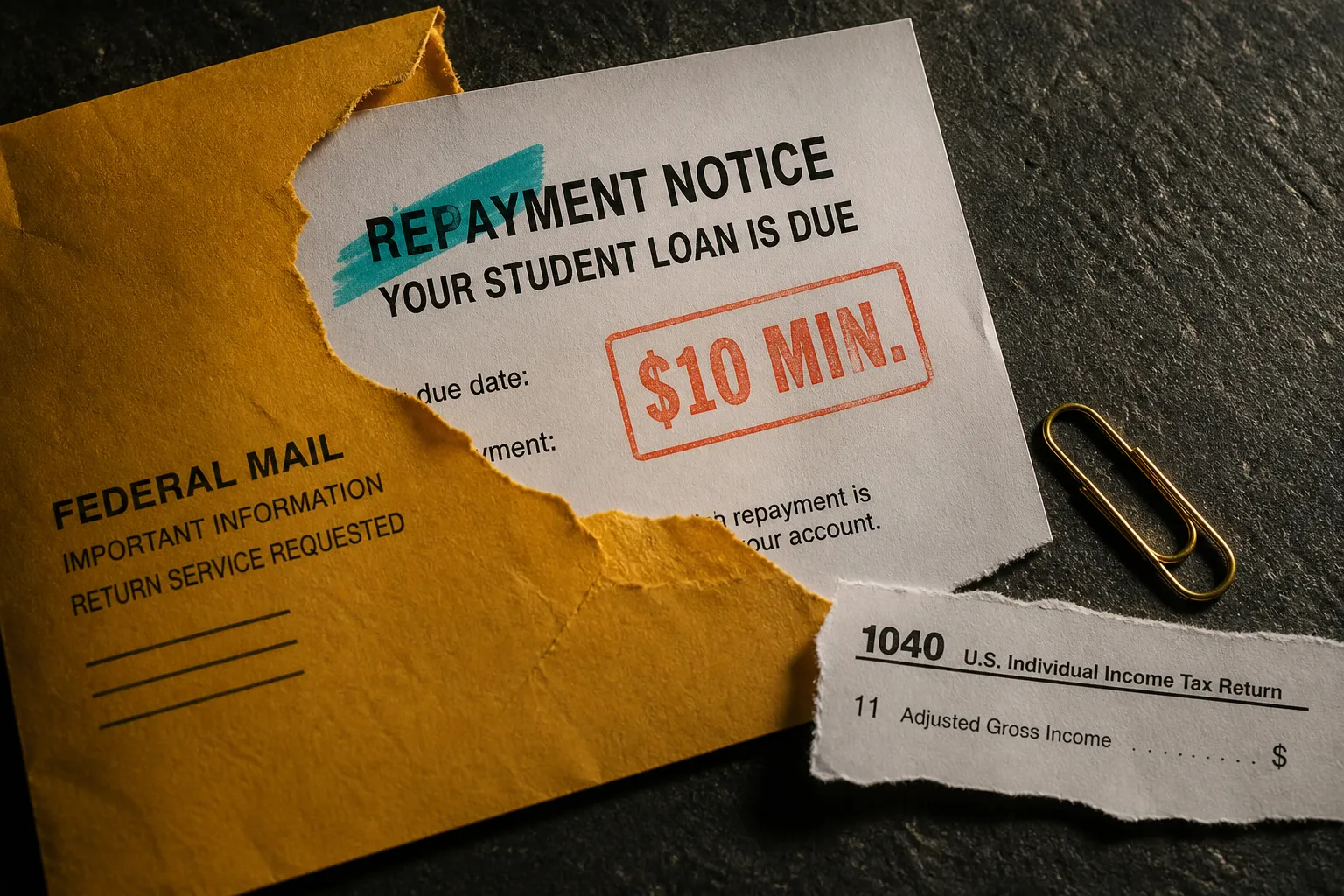
- The Repayment Assistance Plan (RAP) is the new income-driven plan for eligible Direct Loans. It went live July 1, 2026 under the Working Families Tax Cuts Act (P.L. 119-21). Monthly payment is a slice of adjusted gross income, not AGI minus a poverty-line cushion. Floor is $10. Each tax dependent knocks $50 off the month, never below $10.
- If any Direct Loan (including a consolidation) is first disbursed on or after July 1, 2026, your IDR menu collapses to RAP. The other option is the new Tiered Standard plan (10/15/20/25-year terms by balance). Parent PLUS and consolidations that contain Parent PLUS are not RAP-eligible.
- SAVE ended by court order March 10, 2026. Servicers are mailing in waves through October. MOHELA’s public FAQ: 90 days from your notice to pick a plan, or you can be parked on Standard / Tiered Standard. That payment is often the expensive one. Apply at StudentAid.gov, not a random “forgiveness” form in your inbox.
CBS ran “how to apply for student loan forgiveness in 2026” this morning. The actual 2026 change is not a new forgiveness portal. It is a smaller menu: RAP, Tiered Standard, a shrinking set of old IDR plans for people who do not borrow again, and PSLF if you already qualify for PSLF. Log into Federal Student Aid before you Google a third-party app.
Why RAP is the search
Education’s June 9 fact sheet sold “two affordable repayment plans.” Borrowers still on SAVE forbearance are getting a different letter: pick something, or the servicer picks a fixed plan that does not care what you earned. That gap — marketing vs. the 90-day clock — is why RAP student loans is a traffic query in August, six weeks after go-live.
CRS IF13075 is the statute crib sheet. Servicer pages (Edfinancial, MOHELA, Aidvantage) are what your login actually does. If they conflict, the statute and StudentAid.gov win.
The math: AGI, not “discretionary income”
Old IDR (IBR / PAYE / SAVE) started from discretionary income: AGI minus a multiple of the federal poverty line. RAP starts from AGI. Edfinancial’s table, which matches the CRS sliding scale:
- AGI not more than $10,000 — $120 a year ($10 a month). That is the floor. SAVE’s $0 payment is gone.
- More than $10,000 through $20,000 — 1% of AGI, then ÷ 12, then −$50 per dependent.
- Each extra $10,000 of AGI adds one percentage point, through 9% in the $90,001–$100,000 band.
- AGI more than $100,000 — 10% of AGI, capped there.
Worked example, no dependents: AGI $45,000 sits in the 4% band. 0.04 × 45,000 = $1,800 a year → $150 a month. Education’s own fact-sheet comparison put an unmarried borrower with $35,000 of debt and $45,000 of income at $176 on “prior IDR” and $150 on RAP. Your number will not match that if you have a spouse on a joint return (combined AGI) or dependents ($50 each).
Married filing jointly: combined AGI. Married filing separately: your AGI and the dependents you claim. Edfinancial also says a joint-filer’s payment is reduced if the spouse has federal student loans. Do not guess that offset. Run Loan Simulator.
Crossing a bracket can jump the payment even if you got a $500 raise. That is a cliff, not a smooth curve. Do not raid a 401(k) solely to dodge a RAP band. Pre-tax HSA contributions, if you have an HDHP, do lower AGI; they are a health product first: HSA contribution limits for 2026.
Interest waiver and the $50 match
Two RAP features Education is advertising because old IDR often let balances grow:
- Interest waiver. Full, on-time RAP payment that does not cover that month’s interest: unpaid interest for that month is subsidized / waived. Edfinancial: “the interest unpaid after making the monthly payment for that month will be subsidized.”
- Matching principal. If that same on-time payment does not cut principal by at least $50, Education adds a matching principal payment, capped at $50 (ED fact sheet). Edfinancial’s wording: principal is reduced by at least the amount you paid, not to exceed $50. A $10 minimum payment does not magically become a $50 principal cut. Read the servicer math on your bill.
ED’s illustration: no dependents, $35,000 income, $20,000 balance — about $400 of interest waived over the life of the loan and up to about $2,000 in matching principal. That is a brochure example, not your amortization.
Who gets RAP — and who does not
Eligible (Direct only): subsidized, unsubsidized, Grad PLUS, consolidation loans that do not include Parent PLUS.
Not eligible: Parent PLUS, and consolidations that swallowed Parent PLUS (including the old double-consolidation trick). Parent PLUS borrowers looking at RAP as a back door will still bounce. Their box is Tiered Standard unless they already have a qualifying older plan and do not take a new loan after July 1, 2026 — and even then, Parent PLUS was never SAVE/RAP material without consolidation games Education is shutting.
Existing Direct Loans from before July 1 can still sit in IBR (and, until they sunset, PAYE/ICR) if you do not take a new loan or consolidate after that date. PAYE and ICR enrollment windows close; Education’s IDR comparison PDF already tells PAYE/ICR borrowers they must be off those plans before July 1, 2028. IBR remains the legacy IDR for people who never borrow again.
SAVE is over; the 90-day clock is yours
Aidvantage’s alert box: court order March 10, 2026 ended SAVE. StudentAid.gov/courtactions is the official docket page. MOHELA, for its book: FSA already sent overview notices; MOHELA then sends a deadline notice; you have 90 days from that notice. Waves July through October 2026. Miss it, and they place you on Standard or Tiered Standard depending on disbursement dates. Pending SAVE applications can be dumped back to the prior plan.
Once a new-plan request processes, SAVE forbearance ends even if 90 days are left. That is how you go from $0-forbearance to a real bill in one servicer batch. Do not wait for the paper if your inbox already has the FSA overview.
The new-loan trap
CRS is blunt: take out a new Direct Loan or consolidation on or after July 1, 2026 and RAP becomes the only IDR plan for all your Direct Loans. Example they use: you were on New IBR with a 20-year clock; you borrow one more unsubsidized loan; the whole stack is now RAP with a 30-year RAP discharge clock, and you lose the old IBR terms on the vintage loans.
Graduate school, a Grad PLUS, a “cleanup” consolidation — any of those can be the trap. Run the simulator before you sign a Master Promissory Note because the spring semester feels inevitable.
Tiered Standard is the non-IDR fork: 10, 15, 20, or 25 years by how much you borrowed. ED’s example: $30,000 balance, old 10-year standard about $341 a month; under a 15-year tier, about $262. Fixed. Not income-driven. No RAP match. Higher bill than RAP for a lot of mid-income borrowers, lower total interest than a 30-year RAP slog if you can actually pay it.
Cash you do not send the servicer can sit in a HYSA. That is a bank product, not IDR: I bonds vs high-yield savings.
PSLF, 360 payments, and tax
RAP payments that are on time and in full generally count toward Public Service Loan Forgiveness. PSLF is still 120 qualifying payments and qualifying employment. RAP’s own discharge is 360 qualifying monthly payments (30 years). Those are different programs. Do not staple them.
Edfinancial’s tax line on RAP’s 30-year leftover: “Any amount that is forgiven may be considered income for tax purposes.” PSLF discharges have been tax-free at the federal level under current law; RAP’s 30-year leftover is not the same statute. Confirm the tax year with a preparer when you are actually close. Do not budget a 2056 1099-C off a blog.
A fat RAP bill that you put on a card to “keep current” is how people wreck utilization. Credit score plumbing is a different machine: credit utilization ratio.
What to do this week
- StudentAid.gov → loan list. Disbursement dates. Current plan. SAVE vs IBR vs nothing.
- Loan Simulator: RAP vs IBR (if you still have it) vs Tiered Standard. Screenshot the estimates.
- If you got a SAVE switch notice, calendar 90 days from the date on that letter, not from July 1.
- Do not take a new Direct Loan or consolidate until you know it will lock you into RAP/Tiered Standard on the whole book.
- Autopay: Aidvantage notes the Direct Loan autopay rate reduction moved from 0.25% to 1% on July 1, 2026 for loans first disbursed on/after July 1, 2012, with an enrollment cutover Sept. 30, 2026 for a temporary window through June 30, 2028. That is interest-rate plumbing, not RAP. Enroll on StudentAid.gov / your servicer, not a text link.
Forgiveness in 2026 still means: PSLF if you already do public-service work, Teacher Loan Forgiveness if you already qualify, total-and-permanent disability / closed school / borrower defense on their own forms, or RAP’s 30-year leftover if you actually make 360 qualifying payments. There is no new one-click wipe.
Education, not legal, tax, or servicing advice. Plans, interest subsidies, and tax treatment change. Use StudentAid.gov, your servicer, and the statute. This is not a recommendation to enroll in RAP, stay on IBR, or borrow more.