Key takeaways
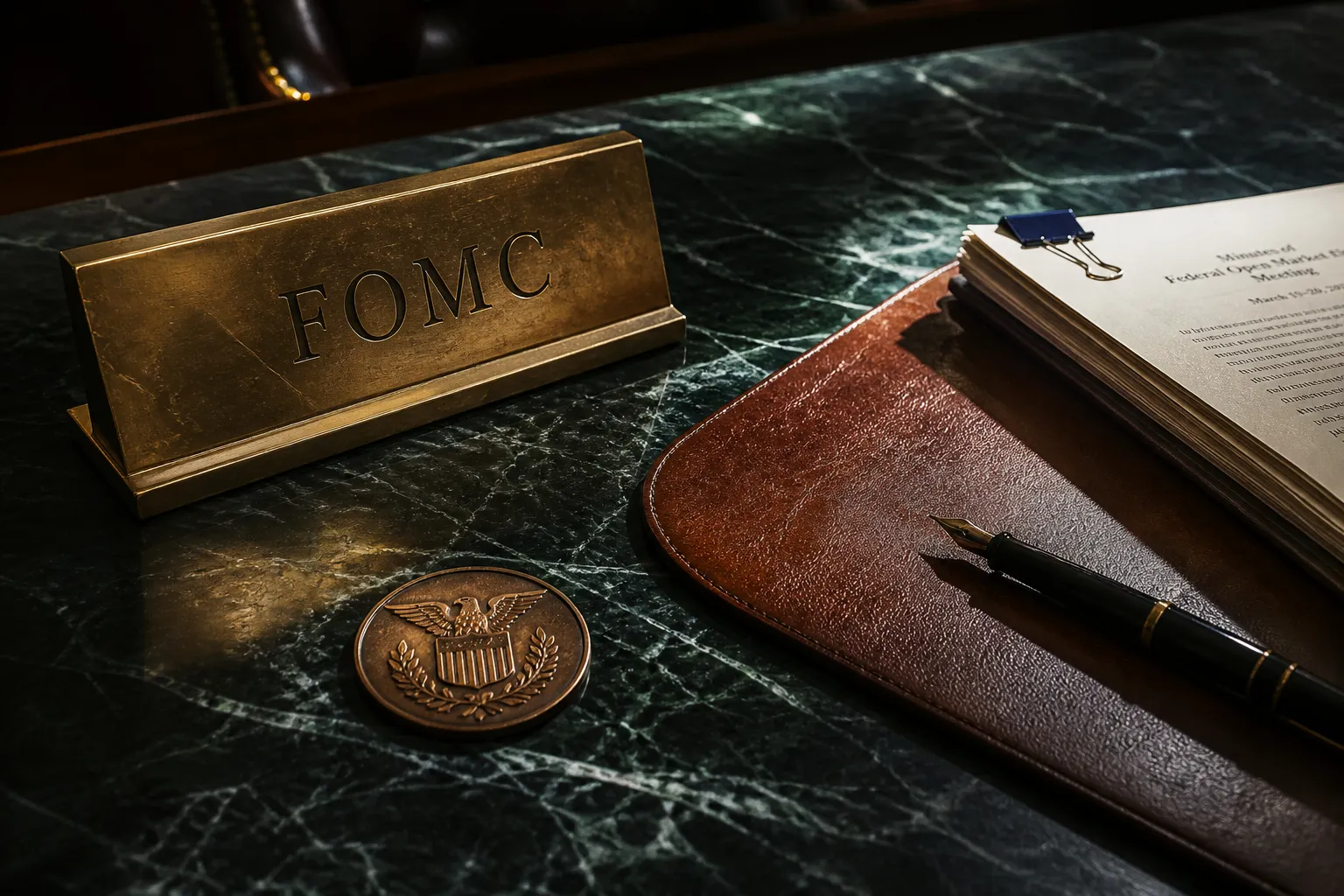
- The Fed released the minutes of the July 28–29 FOMC at 2:00 p.m. ET on Aug. 19. The vote was already public: 9–3 to keep the funds-rate target at 3.50–3.75%. The new information is how many of the nine still talked like hikers.
- Official text: “Many participants assessed that policy tightening would likely be necessary if inflation did not decline.” Some said financial conditions “might not currently be sufficiently restrictive.” Three members voted for +25 bp on the spot: Cleveland’s Beth Hammack, Minneapolis’s Neel Kashkari, Dallas’s Lorie Logan.
- Chair Kevin Warsh asked the room about cutting the calendar to six meetings a year, roughly every two months. No decision. He said any change would not hit the rest of 2026. Next meeting is still Tuesday–Wednesday, Sept. 15–16, with a Summary of Economic Projections.
FOMC minutes are the search today because Chair Warsh does not hand you a dots chart in the statement. The July statement was short on purpose. When the post-meeting text “conveys just the facts,” the three-week-lagged minutes become the surviving record of how the Committee argued. They are also stale. Markets have already repriced September hike odds down from around 60% just after the meeting to the low-to-mid 30s on later data. Treat this document as a reaction function, not a live forecast.
What dropped at 2 p.m.
The Board posts HTML and PDF. Quote the HTML, not a wire paraphrase. Three clocks:
- July 29, 2:00 p.m. — statement and implementation note. Hold. IORB stayed 3.65%. Primary credit stayed 3.75%.
- Aug. 19, 2:00 p.m. — these minutes. Same meeting, extra adjectives.
- Sept. 15–16 — next vote, first SEP of the Warsh chairmanship that includes the post-July inflation prints.
Between those dates the 10-year CMT sat at 4.72% and the 30-year at 5.31% on the Aug. 17 H.15. That tape is later than the room: 10-year Treasury yield.
Who voted, and who dissented
Voting for the hold: Kevin Warsh (Chair), John C. Williams (Vice Chair), Michael S. Barr, Michelle W. Bowman, Lisa D. Cook, Philip N. Jefferson, Anna Paulson, Jerome H. Powell, Christopher J. Waller.
Voting against: Hammack, Kashkari, Logan, “who preferred to raise the target range for the federal funds rate by 1/4 percentage point at this meeting.” No Governor joined them. Three regional presidents, one direction. The statement already named them. The minutes add that “several participants” wanted that 25 bp hike in the discussion, and that a few of the hike camp thought doing it in July would “help forestall the need for a steeper and potentially more costly sequence of tightening moves at a later stage.”
That last sentence is the hawkish tell. It is not “we like 3.75% forever.” It is “if you wait, you may have to do more.”
The inflation the staff brought in
Staff numbers in the minutes are as-of the meeting, not as-of Aug. 19:
- 12-month PCE, May: 4.1% headline, 3.4% core.
- Staff estimate for June (from CPI/PPI): headline down to 3.7%, core to 3.3%, energy deceleration doing most of the headline work.
- Unemployment, June: 4.2%. Average hourly earnings +3.5% over 12 months, 0.4 point slower than a year earlier.
- Staff inflation forecast: step-down in H2, about 2% in 2028. Risks to inflation skewed up. Risks to GDP and jobs skewed down.
Participants said price increases over the past year were broad based. Some said even after stripping tariffs and energy, underlying inflation looked elevated. Some named data-center materials — chips, steel — plus smartphones, computer gear, software, and electricity. That is the AI-capex inflation channel, not a one-off gasoline print. Oil is still the other channel: the statement blamed energy supply shocks and Middle East uncertainty. Spot Brent has been near $91 versus an EIA STEO that still has Q3 averaging closer to $85: Brent crude oil price.
COLA 2027 is a different machine (CPI-W, third-quarter average). Do not paste May PCE 4.1% into a January Social Security check: Social Security COLA 2027.
AI buildout and financial stability
The Desk said AI-infrastructure equities had beaten the S&P and the hyperscalers year to date, then stalled over the intermeeting period. Hyperscaler credit spreads widened versus IG. Private-credit BDC redemptions were still rising in Q2.
Staff financial-stability language is the part most recaps skip. Vulnerabilities “notable.” Asset valuations “elevated.” The equity premium — forward earnings yield minus long rates — “was at a level that has only been lower in recent history during the dot-com bubble.” Hedge-fund leverage “near all-time highs,” concentrated in the largest funds. Some participants flagged AI infrastructure financed with more borrowing, including nonbanks and regional banks. A few mentioned cybersecurity risk from the same tech stack.
That is the Fed’s own staff putting a late-1990s comparison in the minutes three weeks before NVIDIA reports Q2 FY27. GPU and optics names still need a cost of capital: AI semiconductor and optical stocks.
Gold sold off Tuesday in the mid-$4,300s while the 30-year tagged a 19-year high. Non-yielding metal versus a 4.7% coupon is the same duration argument the minutes imply when they say financial conditions tightened on hike odds: gold price.
Warsh’s six-meeting calendar
Official paragraph: the Chairman said six scheduled meetings a year, roughly every two months, “would allow more information to accumulate between meetings than under current practice and provide policymakers and the staff more time to consider strategic monetary policy issues.” He asked for input. “No decisions regarding possible changes in the meeting schedule were made.” 2026’s remaining dates stay on the eight-meeting grid.
Fewer meetings is not a rate cut. It is a communication design. Longer gaps make each SEP heavier and each intermeeting speech louder. Jackson Hole (Aug. 27–29) is still a symposium, not an FOMC. The printed KC Fed theme is payments. The market will still parse adjectives on inflation: Jackson Hole 2026.
What the minutes are not
Not a September decision. Not the SEP. Not live FedWatch. Not a license to call Powell a “shadow chair” because he voted with the majority — he is a sitting Governor on this roster. Not proof that “many” equals a majority for a hike on Sept. 16. FOMC English uses “many,” “some,” “several,” “a few,” and “various” on purpose. They are not vote counts.
The minutes also do not update oil, CPI, or payrolls after July 29. If you trade the document as if August never happened, you will fade a reaction function that the tape already faded.
From here to September
- Jackson Hole, Aug. 27–29. Warsh keynote. Payments on the agenda. Real-rate language still moves the 2-year more than a stablecoin paragraph.
- NVIDIA after the close Aug. 26. Not an FOMC input. It is an input to the equity-premium paragraph the staff already wrote.
- Sept. 15–16 FOMC + SEP. That is the live vote. Minutes of that meeting land in early October.
If incoming inflation stays sticky after you strip energy, the July “many” becomes the September argument. If core cools and the labor market stays 4.2%-ish, the 9–3 hold is the template and the three dissents stay regional. Do not interpolate a 25 bp hike from a minutes headline.
Education, not a recommendation to trade Treasuries, the dollar, or Fed funds futures. Minutes are a lagged transcript. Policy rates, IORB, and primary credit are set by the Board and the FOMC, not by this article. Check federalreserve.gov for the live HTML/PDF.