Key takeaways
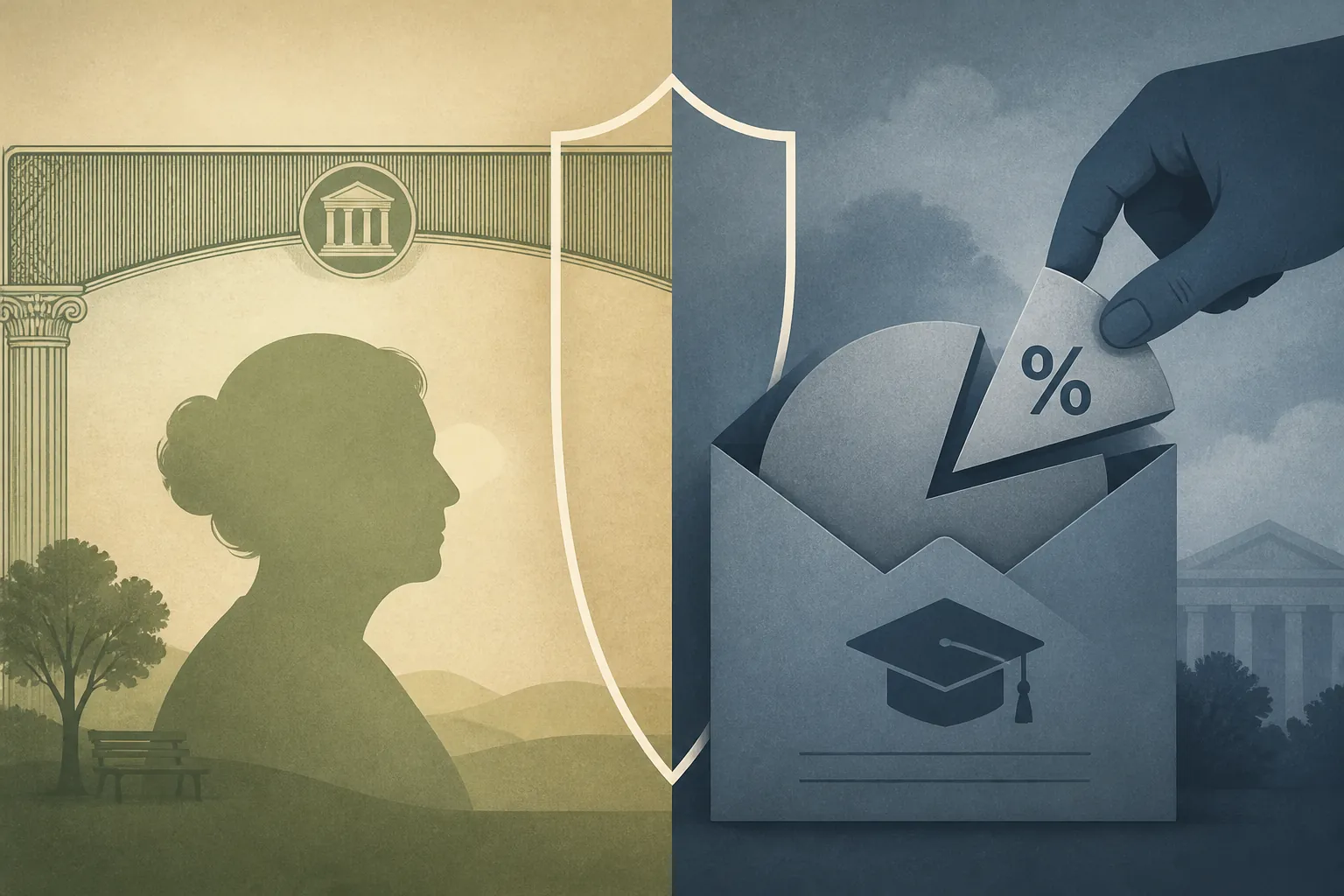
- Social Security garnishment (via the Treasury Offset Program) can withhold up to 15% of a monthly Social Security check to collect a defaulted federal student loan, as long as the borrower is left with at least $750 per month — a floor Congress set in 1996 and never inflation-adjusted.
- Roughly 450,000 borrowers age 62+ in default have been cited as exposed if offsets resume at scale; Education Department data put total federal defaults near 9–9.6 million as of early 2026.
- Sens. Sanders, Warren, and Markey floated the Stop Social Security Garnishment Act of 2026 (announced mid-August; formal Senate introduction tied to the September return). A bill is not a protection. The administrative pause on involuntary collections is also not a permanent ban.
Old student debt does not age out of the federal collection toolbox. Social Security garnishment is the version that hits people who already live on a fixed check. August’s Senate proposal made the headline. The rules underneath are older — and still live until Congress or Treasury changes them.
Mode: rotate · Category: Explainers (Guides)
What Social Security garnishment means
When a federal student loan is in default (generally 270+ days past due on the federal system), the government can use involuntary tools: wage garnishment, tax refund offset, and — for some borrowers — offsets against federal benefits through the Treasury Offset Program.
Social Security garnishment here means Treasury withholds part of a Social Security retirement or disability (SSDI) payment to apply toward that defaulted student debt. It is not a private collector calling. It is the same federal plumbing that can grab a tax refund.
Private student loans do not use this exact federal offset path the same way. This explainer is about federal loans in default.
How much can be taken — the 15% and $750 rules
Under current authority described across Hill fact sheets and borrower-advocacy coverage:
- Up to 15% of the monthly Social Security benefit can be offset
- The borrower must be left with at least $750 for the month
- That $750 floor dates to 1996 and has not been indexed for inflation — analysts often note it would be closer to ~$1,450 in today’s dollars if it had kept pace
Sen. Warren has estimated seniors in default could lose more than $2,000 a year if offsets run at full scale. Exact dollars depend on the benefit amount and the 15% / $750 math on that month’s check.
Half of beneficiaries who previously had a check garnished for student debt reported skipping a doctor visit or being unable to get a needed prescription because of cost, per figures repeated in the Sanders fact sheet package.
Who is at risk right now
- ~3 million+ Americans over 62 carry student debt (Sanders packet)
- ~452,000 / ~450,000 age 62+ in default often cited as the cohort most exposed to a Social Security offset restart
- ~9 to 9.6 million federal borrowers in default overall (Education Department figures cited into mid-2026 reporting)
- Nearly half of seniors trying to live on less than $30,000 a year (fact-sheet framing)
Parent PLUS borrowers and people who borrowed for kids decades ago show up in this population — it is not only recent Gen Z files. Younger credit stories and older collection stories are different chapters of the same debt system: Gen Z credit scores, RAP / student loan repayment.
The collections pause — and why it is not a repeal
Involuntary collections have been restarting in stages since the Covid-era freeze ended. Reporting through August 2026 describes:
- Education Department resumed some involuntary collections in 2025, then walked back Social Security offsets after public pressure (June 2025 framing in CNBC coverage)
- Further delays tied to implementing new repayment structures from the July 2025 “big beautiful bill” / repayment overhaul
- Treasury taking a larger role in student loan collections — the agency that runs offsets also sitting closer to the debt itself
CNBC and borrower desks stress the practical point: a pause gives time to rehabilitate or get into a repayment status. It does not erase the statutory authority to garnish later. Do not treat “collections are paused” as “Social Security is permanently safe.”
Reporting anchors: CNBC on the Sanders proposal, Business Insider on the bill push, College Investor explainer.
The Stop Social Security Garnishment Act
Announced Aug. 17, 2026 by Sen. Bernie Sanders (I-VT), with Sens. Elizabeth Warren and Ed Markey as cosponsors. Formal introduction was tied to the Senate’s September return in several reports.
What the proposal does, per the Senate PDF / fact sheet:
- Amends Higher Education Act Title IV to block Social Security Act payments from being offset under federal debt collection when the debt is a defaulted federal student loan
- Covers retirement benefits and SSDI
- Would take effect if enacted — it does not cancel the underlying loan
Source packet: Stop Social Security Garnishment Act fact sheet (PDF).
Political reality check from market and policy desks: long odds in a Republican-controlled Senate, no committee markup scheduled in early coverage. Watch cosponsors and whether Treasury restarts Social Security offsets this fall more than the press conference.
Disability discharge you may already qualify for
The Sanders packet estimates roughly 1 in 5 Social Security beneficiaries with student loans may already qualify for a disability-related discharge they never received. That is a separate path from garnishment reform: if you receive SSDI / qualify under Education Department total and permanent disability rules, chase the discharge paperwork — do not wait for a bill that may never pass.
Leaving a forgivable loan in default is how people end up in the offset pool unnecessarily.
What to do if you are in default
- Confirm status on StudentAid.gov / your servicer — default vs late vs collections
- Ask about rehabilitation or consolidation paths that can end default and stop involuntary tools
- Check disability discharge if you receive Social Security disability benefits
- Do not ignore mail from Treasury / Education about offset — response windows matter
- Budget as if the pause can end — model a 15% cut with the $750 floor on your actual benefit
- Watch COLA math separately — a small annual bump does not cancel an offset; see Social Security COLA 2027
What this is not
- Not automatic forgiveness
- Not protection for private loans under the same federal offset statute
- Not a guarantee that wage garnishment or tax refund offsets stay off
- Not advice to stop paying if you can enter a repayment plan
Social Security garnishment for student loans is a narrow, brutal tool: up to 15% of a check, a fossil $750 floor, and a population of older borrowers who already stretch every dollar. August’s bill is the right moral headline. Until it is law — or Treasury permanently closes the tap — treat the pause as borrowed time to exit default, not as a finished story.
Informational only — not legal, tax, or student-loan advice. Confirm status and options with Federal Student Aid, your servicer, and a qualified counselor or attorney.