Key takeaways
- Gen Z credit scores (FICO ages 18–29) are higher than just before Covid, with a 17-point average gain since 2019 — the largest rise of any age band FICO measured. Millennials (30–44) posted the second-biggest gain.
- As of April data in the CNN/FICO package: 49.6% of 18–29 borrowers score 700+, up from 41.4% in April 2020. Overall U.S. FICO scores dipped slightly April 2025–April 2026; Gen Z still edged +1 over that year.
- The average hides a split: scores moved toward both high and low extremes. About 3.2 million borrowers with a student payment due showed a recent delinquency; those files fell ~38 points on average.
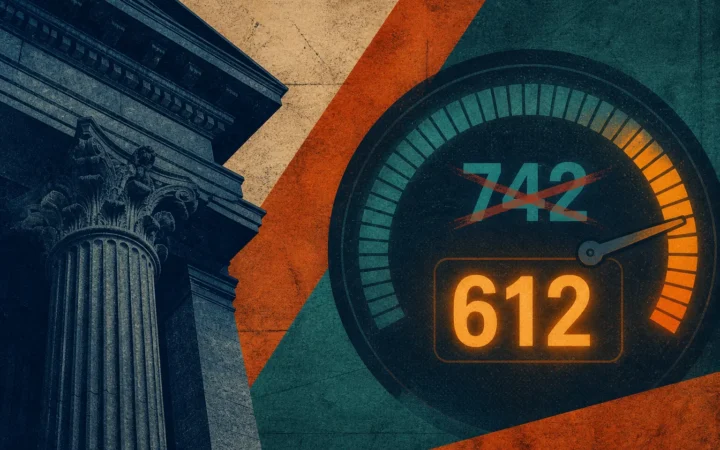
The headline is not “Gen Z is rich.” It is that the credit file for 18-to-29-year-olds improved more than any other age group FICO tracked since 2019 — while student loan delinquencies, housing costs, and a K-shaped recovery still chew the bottom half. That is resilience and fragmentation in the same spreadsheet.
Mode: rotate · Category: Credit (Finance)
What FICO told CNN about Gen Z credit scores
FICO research shared first with CNN (published Aug. 25, 2026) found:
- Ages 18–29: highest average credit-score increase since 2019 among measured groups — about +17 points
- Ages 30–44 (Millennials): second-largest gain over the same window
- Share of 18–29 borrowers at 700+: 49.6% as of April (from 41.4% in April 2020)
- Nationwide average FICO scores: slightly down April 2025 to April 2026; Gen Z still +1 over that year
Primary reporting: CNN Business on young Americans’ credit scores.
Most of the post-2019 lift happened early in the pandemic, when student loan payments were paused and bureau reporting rules shifted — a one-time cushion, not a permanent law of nature.
Why younger scores rose when the economy feels worse
Three mechanics show up again and again:
- Room to grow. Thin files and short histories have more upside when on-time payments stack. FICO does not score “age,” but length of successful payment history is in the model.
- Mix of credit. Moving from cards-and-student-loans into auto loans and (for some) mortgages can help if payments stay clean — experience on more trade lines, not just a higher limit.
- Attention. LendingTree’s Matt Schulz told CNN Gen Z is “pretty savvy about credit” after years of economic headwinds; free score tools and creator finance content lowered the old gatekeeping.
Schulz’s metaphor: early credit is like borrowing a parent’s car. Restrictions first; trust after clean history. That is why time-on-file plus no 30-day lates compounds.
For the utilization piece of the score — how much revolving credit you use — see our earlier explainer: credit utilization ratio.
The K-shaped catch under the average
FICO’s Tommy Lee flagged the distribution shift for 18–29: scores moved toward both higher and lower ends, not a neat middle pile. High scores today are higher than in 2019 — and low scores are lower.
“There’s a lot of fragmentation among Gen Z. Many of them are thriving. Some are struggling and relying on support from parents. We’re definitely seeing a K-shaped economy,” Lee said.
That matches the broader soft-data mood this week — households that feel employed enough to spend on necessities but nervous about the next six months: consumer confidence August 2026.
An average Gen Z credit score headline without the K-shape is marketing copy. The policy and product question is who got the +17 and who got the other fork.
Student loans: the 38-point trap
Covid payment pauses helped scores. Restarted payments and credit reporting are the counterweight.
FICO’s April snapshot (via CNN):
- ~3.2 million Americans of all ages with a student payment due (~14%) showed a delinquency of 30+ days in the prior six months
- Those deemed delinquent: average FICO drop ~38 points
- ~4.9 million resolved a delinquency or moved into another repayment status (including starting a plan): average score +16
Schulz’s warning still stands: one payment 30 days late can damage a file for years — especially when a mortgage underwriter later reads the report. Related desk: RAP / student loan repayment context.
Mortgage math still bites first-time buyers
FICO also noted the average monthly mortgage payment for a first-time buyer is about 57% higher than in 2019. A stronger score helps the rate and the approval odds. It does not shrink the payment if prices and rates stay elevated.
So Gen Z credit scores can look “fine” on paper while homeownership stays out of reach — another reason the K-shape matters more than the mean.
What actually moves a young FICO file
Boring list, still the list:
- On-time payments — the fastest way to lose points is a 30-day late
- Utilization — keep revolving balances low relative to limits; pay before statement close if needed
- Don’t close every starter card — average age of accounts matters
- Authorized-user / thin-file strategy — only with someone who pays on time
- Student loan status — forbearance, IDR, or rehab beats silent delinquency
- Hard inquiries — rate-shop in a tight window; don’t spray applications
If a bureau error is dragging the file, dispute paths and settlement context still matter — see Equifax credit score settlement coverage.
What to do if you are in the bottom half of the K
- Pull all three bureau reports / free weekly scores and list every late or collection
- Stabilize student loans first if that is the delinquency driver — a plan that reports current beats heroic lump sums that fail
- Attack high-utilization cards before opening new retail cards for “rewards”
- Ignore “rapid rescore” spam; build 3–6 months of clean history
- Treat creator finance advice as optional — the FICO model still rewards payment history over vibe
Gen Z credit scores beating pre-Covid averages is real FICO data, not a vibe cycle. The useful read is narrower: nearly half of young borrowers are in strong-score territory, the distribution is splitting, and student loan lates still cost roughly 38 points. Protect the payment streak. The average will not save a file that went 30 days late.
Informational only — not credit, lending, or legal advice. Confirm scores and loan status with your servicer and the bureaus.