Key takeaways
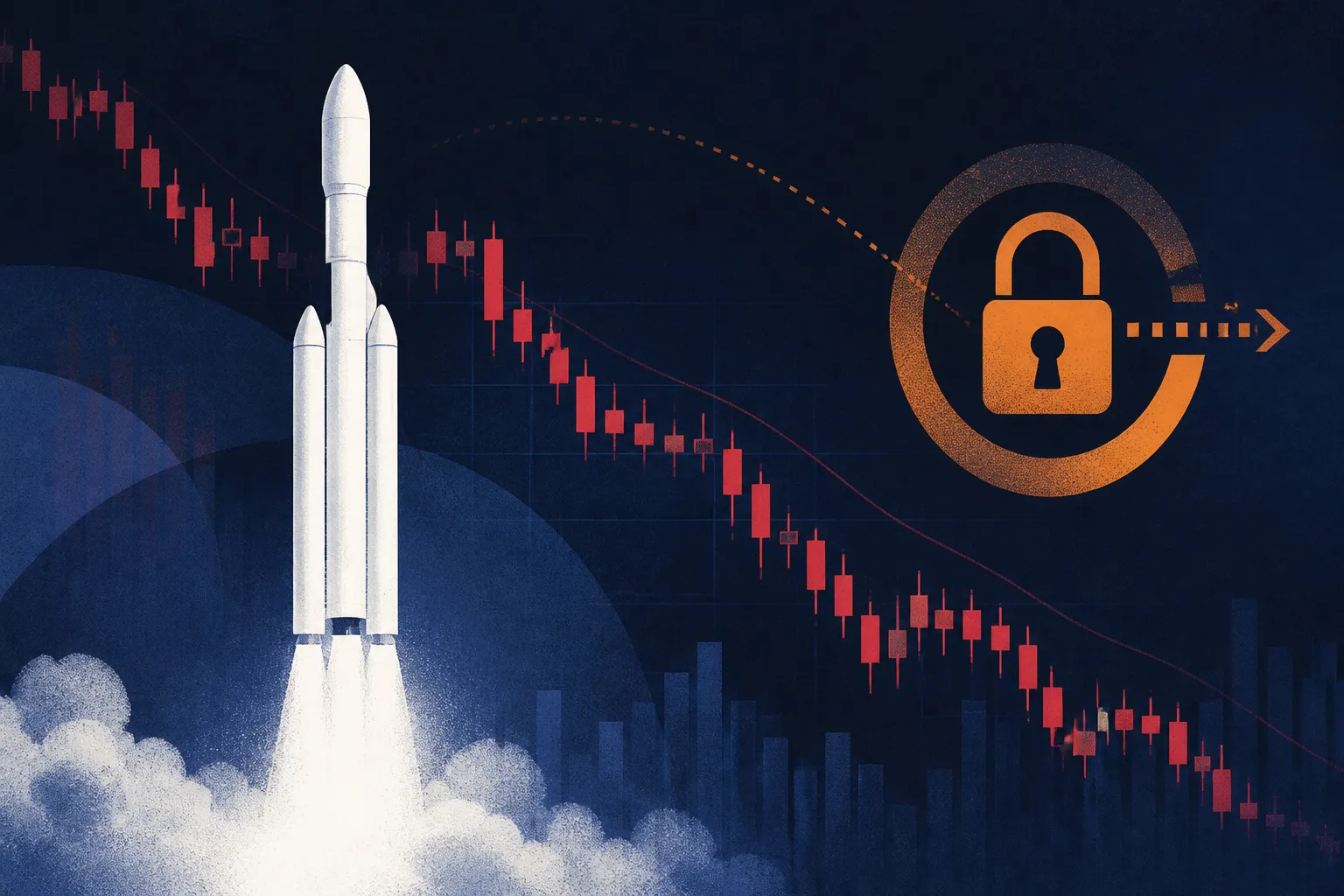
- SpaceX stock fell roughly 4–5.6% on Aug. 20, 2026, with closes near $134 and intraday prints toward the low $132s — back under the $135 IPO price — as about 319 million more insider shares became eligible to trade.
- This is the second major post-IPO lockup release. The first (Aug. 6, ~912 million shares) actually saw the stock close up 6.1% at $114.92 while freely tradable float jumped from about 4.9% to 11.8% of shares outstanding. Unlock days are not automatic selloffs.
- Market cap still hovered near $1 trillion after the drop. Lockups change supply optionality; they do not cancel Starlink, launch cadence, or AI-infrastructure optionality. Price now has to clear a thicker float.
SpaceX stock is learning what every mega-IPO learns in month two: the story can stay intact while the share count that can hit the tape expands overnight. Aug. 20 was not a failed launch. It was a calendar event — 319 million previously restricted shares unlocked — and buyers demanded a discount to absorb the new eligibility.
What SpaceX stock did on Aug. 20
Reporting across Aug. 20–21 put the session roughly here:
- Close: about $134 (−4.05% in one tally)
- Intraday: as low as ~$132.81; other wraps cited ~5.6% to $131.86
- Vs IPO: slipped back under the $135 offer price
- Market value: still near $1.02 trillion after the hit
Exact prints vary by feed; the direction does not. SpaceX stock sold the unlock, then found buyers before a total collapse. For the launch-ops side of the brand — not the ticker — see SpaceX Starlink launch Aug. 20.
319 million shares — the second unlock
Post-IPO lockups stagger when employees and early investors may sell. SpaceX’s schedule is unusually large because the company came public with a thin float relative to its valuation.
Aug. 20 unlocked roughly 319 million insider shares — the second major tranche. Barron’s and other previews framed it as following an ~912 million-share release on Aug. 6. Eligibility expands the potential float; it does not force every holder to dump at the open.
Coverage: Startup Fortune on the Aug. 20 lockup session.
Why the Aug. 6 unlock did not crush the stock
The easy narrative — “lockup = crash” — already failed once. On Aug. 6, after the larger ~912 million-share unlock, SpaceX stock closed up 6.1% at $114.92 even as freely tradable shares rose from ~4.9% to ~11.8% of outstanding.
That contrast is the lesson for Aug. 20: markets price expected supply in advance. When the second tranche arrived, some of that prep was already in the chart — and some was not. Buyers who ignored the calendar got a reminder.
Float is growing from a tiny base
SpaceX raised on the order of $25–26 billion at IPO (mid-June 2026 closes cited in lockup coverage) with a starting public float that was a small slice of more than 13 billion shares outstanding. That scarcity premium is why a trillion-dollar market cap could coexist with a thin tape.
Each unlock dilutes scarcity without diluting the enterprise in the corporate-finance sense. Same company, more shares that can trade. SpaceX stock therefore trades less like a private rarity and more like a normal mega-cap — with normal supply shocks.
Eligible to sell is not the same as selling
Read the fine print every unlock week:
- Eligible = legal right to sell under the lockup schedule
- Sold = actual prints on the exchange
Employees may hold for taxes, loyalty, or belief in Starlink. Early VCs may drip sales over months. Volume spikes on unlock day often mix true selling with short-term traders fading the event. Do not equate 319 million eligible with 319 million sold.
Still, dealers and institutions hedge the option of that supply. That hedging alone can pressure SpaceX stock even if net insider selling is modest.
Rockets, Starlink, and the AI narrative still matter
Wall Street’s long-term case has not flipped because of one lockup day. Bulls still point to:
- Launch cadence and reusable rocketry cash flow
- Starlink’s global connectivity network
- Adjacent AI / compute infrastructure optionality layered onto the launch and satellite stack
Bears answer with valuation: a ~$1 trillion price tags in a lot of perfect execution while the float is still normalizing. Lockup weeks are when that argument gets a louder microphone.
Why OpenAI is watching this tape
CNBC noted that OpenAI executives are managing investor nerves partly by pointing at competition, open-weight models, and SpaceX’s choppy first months as a public company. OpenAI CFO Sarah Friar told staff the lab “will be a public company in 2027” (or sooner if growth inflects) — and framed the IPO as a milestone, not a finish line, after a $122 billion March raise at an $852 billion private mark.
SpaceX stock is the live case study for what happens when a private AI-adjacent giant hits a public float calendar. For OpenAI’s separate safety pause story, see OpenAI training pause.
What SpaceX stock holders watch next
Checklist:
- Next lockup dates — size and schedule of remaining tranches
- Actual volume vs. eligible shares — how much of the 319M actually traded
- $135 IPO level — reclaim or accept a new post-unlock range
- Starlink and launch metrics — do fundamentals reassert after supply noise fades?
- Macro — high long yields and risk-off days amplify unlock selling; see Treasury buyback
SpaceX stock on Aug. 20 priced a second unlock, not a broken franchise. Eligibility rose; the IPO premium took a hit; the trillion-dollar story stayed on the board. The next lockup date will tell you whether Aug. 20 was digestion or the start of a thicker, cheaper equilibrium.
Market commentary only. Prices, lockup schedules, and float data change. Confirm exchange filings and quotes before trading. Not investment advice.