Key takeaways
- Compounded GLP-1 products are not FDA-approved. They are not legally “generic Ozempic” or “generic Zepbound.”
- Tirzepatide and semaglutide came off FDA’s shortage list. That list was the main statutory hook for making copies at scale. Ads did not all update.
- Salt forms, B12 add-ins, drops, and dissolving tablets are not the pens that ran the trials. Dosing errors and sterility are the boring risks FDA keeps writing warning letters about.
Compounded GLP-1 is the phrase behind a lot of 2026 weight-loss ads that never say Ozempic and somehow still mean it. Mounjaro and Zepbound search spiked again this summer. Wikipedia traffic on Mounjaro jumped hard in early August with no new FDA approval attached. People land on a telehealth checkout, a vial shows up in a cooler, and the assumption is: same shot, cheaper label.
That assumption is the product. This page is about the legal and chemical gap, not about whether you should be on an incretin drug. That is a clinician problem. The vial-in-the-mail problem is a labeling problem.
What compounding is
A compounding pharmacy mixes a drug for a specific patient when a commercial product does not fit: a dye allergy, a discontinued strength, a liquid a child can swallow. U.S. law splits the work.
503A pharmacies compound pursuant to a patient-specific prescription. Traditional drugstore compounding lives here.
503B outsourcing facilities can make larger batches under FDA registration and CGMP-ish rules. They still cannot treat an approved blockbuster as a bulk commodity just because Instagram wants a cheaper pen.
Compounded drugs skip the FDA’s new-drug approval. No requirement that this batch match the STEP or SURMOUNT trials. No FDA-approved label. FDA says that in plain English: FDA’s concerns with unapproved GLP-1 drugs used for weight loss.
When a site says “clinically proven weight loss” next to a compounded vial, FDA has already called that misleading. Warning letters in 2025–2026 (examples: Lyfe Rx, WeightCare) hammer the same point: you cannot borrow Wegovy’s trial and paste it on a product FDA never approved. Lyfe Rx letter, WeightCare letter.
The shortage on-ramp
Demand blew through supply in 2022. Semaglutide and tirzepatide landed on FDA’s drug shortage list. That status opened a statutory window: pharmacies could compound copies they normally could not mass-produce while an approved version was commercially available.
That window is what the industry sold as “compounded Wegovy.” It was a shortage workaround, not a new generic class.
FDA resolved the tirzepatide shortage in late 2024 and semaglutide in early 2025, then ran wind-down periods. Stanford Medicine’s July 2026 explainer is a clean recap: once the drugs were off the list, the copy pathway largely closed, and FDA started proposing to keep semaglutide, tirzepatide, and liraglutide off the 503B bulks list so large compounders cannot treat those APIs as a standing catalog. Compounded GLP-1s: why doctors worry and the FDA is cracking down.
If an ad in August 2026 still talks like the shortage is on, the ad is lagging the Federal Register. Check the current shortage database yourself rather than the landing page: FDA drug shortages.
Not the same molecule story
Approved injectables use a specific salt, a specific concentration, a specific pen. Compounders have used other salt forms (FDA has flagged semaglutide sodium and acetate versus the approved base), mixed in B12 or carnitine, and sold drops or dissolving tablets that never sat in a Phase 3 trial.
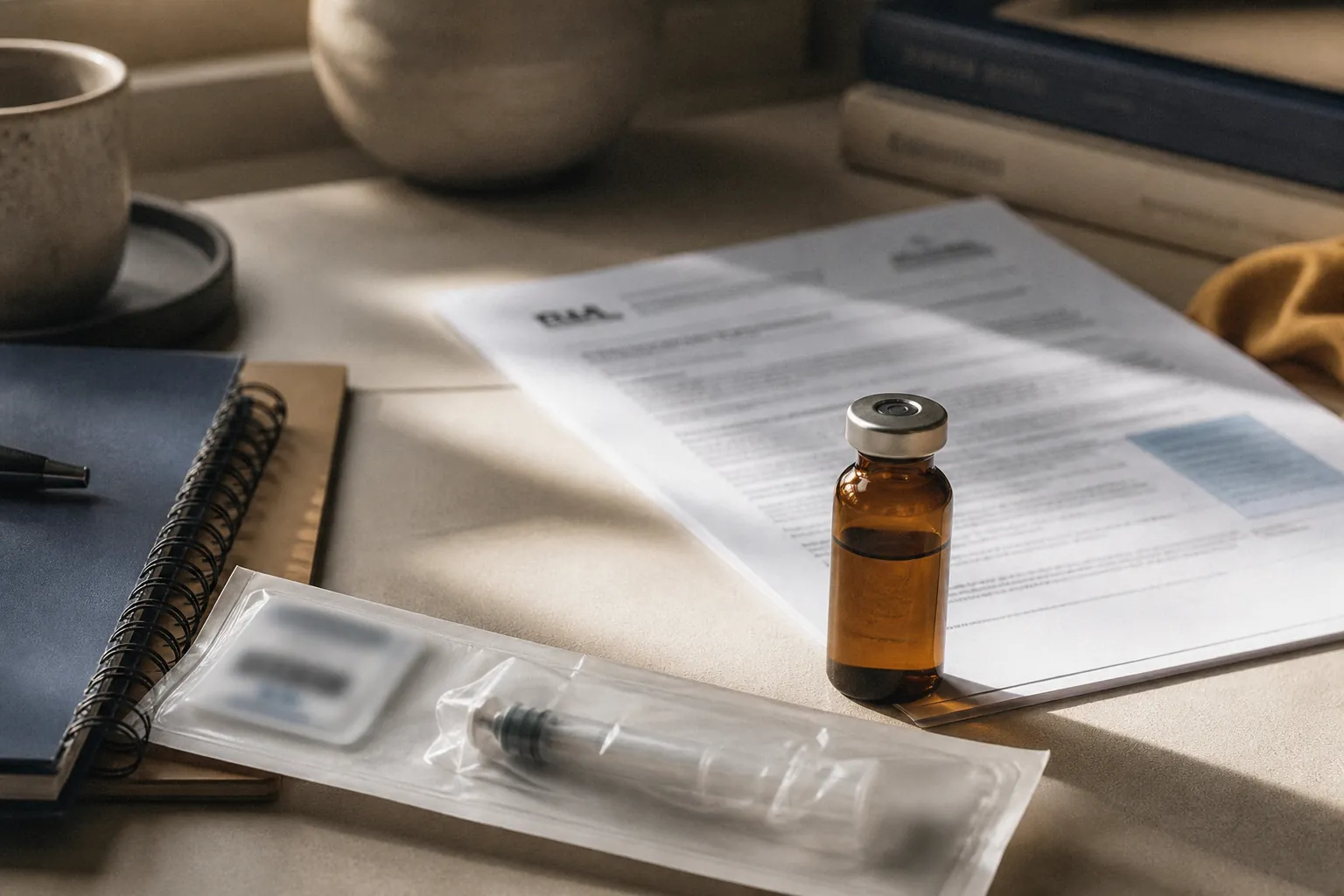
Adding B12 does not make it “better Ozempic.” It makes it a different recipe. FDA’s 2026 testing chatter and warning letters keep circling extra ingredients that are not in the approved products. Dosing math also breaks when a clinic converts milligrams from a multi-dose vial with a syringe you fill yourself. The branded pens click. A vial plus a drawing needle is how people inject the wrong milliliters.
Research-chemical “semaglutide” sold for “not for human use” is a third pile. That is not a 503A prescription. It is a gray import. FDA stood up a “green list” import alert aimed at unverified foreign GLP-1 APIs: FDA green list announcement.
What FDA keeps flagging
The agency’s patient page lists the hits that show up in adverse-event reports and warning letters:
- Dosing errors from compounded vials and syringes
- Unapproved salt forms
- Contamination and sterility failures
- Counterfeit or falsely labeled pens
- Marketing that implies FDA approval or trial-level proof
FDLI noted that in the first half of 2026 FDA issued a stack of warning letters to compounding shops and telehealth fronts for adulterated or unapproved GLP-1s, including internet sales. You do not need that law-review tone. You need: the enforcement is not theoretical, and hospitalization risk in reported events has been higher for compounded products than for the approved pens in FDA’s own summaries.
Boxed warnings on approved semaglutide (thyroid C-cell tumor risk in rodents, the usual “this is a serious drug” banner) still exist on the brand. Compounded labels may skip, shrink, or invent that language. Missing a boxed warning is not a feature.
How the ad is built
The funnel is standardized. Quiz. BMI field. A clinician you never meet. A monthly price under the brand copay. A vial in a gel pack. “Pharmacy partner” in eight-point type.
Price is doing the talking because list prices on Wegovy and Zepbound are brutal without coverage. Direct-to-consumer brand programs and some insurer coverage changed the math in 2025–2026, which is part of why FDA argues there is no remaining “clinical need” to mass-copy. The ad does not mention that. The ad mentions your jeans.
Influencers say “my compound.” They cannot audit the clean room. They cannot tell sodium salt from base. They can tell you the scale moved.
How to tell what you were sold
FDA-approved Ozempic, Wegovy, Mounjaro, Zepbound, Rybelsus come as manufacturer packaging: named pen or tablet bottle, NDC, lot, expiry, Medication Guide. A U.S. pharmacy that bills insurance usually shows the brand or the authorized generic path, not “semaglutide 5 mg/mL, compounded.”
A compounded product should still name the compounding pharmacy, not just the telehealth brand. Some 2026 warning letters dinged companies for putting their consumer brand on the label as if they mixed the drug. If the website and the vial disagree about who made it, that is the letter’s fact pattern.
Ask, in writing:
- Is this FDA-approved, or compounded?
- Which pharmacy, 503A or 503B?
- What salt, what concentration, any extra ingredients?
- What is the NDC if it is a branded pen?
If they answer with a coupon code, you do not have an answer.
If you already have a vial
Do not crowd-source titration in a comments section. Wrong milliliters on a GLP-1 is how people end up in an ER with vomiting and a glucose crash. Talk to the prescriber whose name is on the script. If you cannot name that person, you bought a funnel.
Report problems to MedWatch. That is how FDA even knows the compounded batch existed: MedWatch.
Coverage fights and cash pay for the approved pens are real. That does not turn an unapproved copy into a generic. Generics have an ANDA. This does not.
Muscle loss, food noise, gallbladder, delayed emptying: those are drug-class conversations with a clinician on whatever product you actually inject. This article is the packaging layer. The class effects do not make a mystery vial safer.
Educational only. Not medical, legal, or pharmacy advice. FDA pages and your prescriber outrank a blog. Do not start, stop, or switch a GLP-1 from this text.